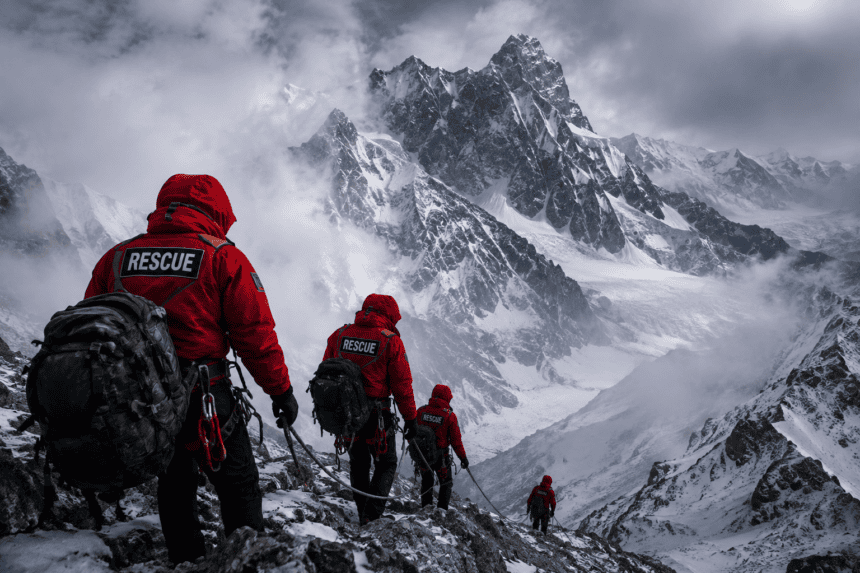
A search and rescue team arrived at the suspected location of Pakistani climber Asma Mushtaq early Tuesday, ending days of uncertainty following her disappearance during a high-altitude expedition.
The team reached the targeted coordinates on the mountain’s upper reaches after weather conditions finally permitted a window for ground movement. Mushtaq went missing late last week while attempting a summit push. Communication with her expedition group broke down shortly after she deviated from the primary route during a sudden localized storm.
The recovery mission faces immediate pressure. High-altitude rescue operations are volatile by nature, and the team on the ground is working against the clock as forecasts predict another drop in temperature and increased wind speeds by Wednesday evening.
“The terrain is unforgiving, and the window we have is razor-thin,” said a senior official from the regional mountaineering authority. “Our priority is to secure the site and determine if a recovery is immediately possible or if the conditions will force a pause.”
Mushtaq, an experienced climber who had previously tackled several peaks in the Karakoram range, was part of a small, self-supported team. Her disappearance sparked a swift, localized mobilization, though logistical hurdles—including the high elevation and difficult topography—slowed the initial response.
The incident has reignited debates regarding safety protocols for independent climbers in Pakistan’s northern ranges. While tourism in the region has surged, infrastructure for rapid emergency response often struggles to keep pace with the influx of mountaineers.
The rescue team is expected to provide a status update once they establish a stable base at the site. For now, the mountain remains silent, and the wait for answers continues for those tracking the mission from the base camp.