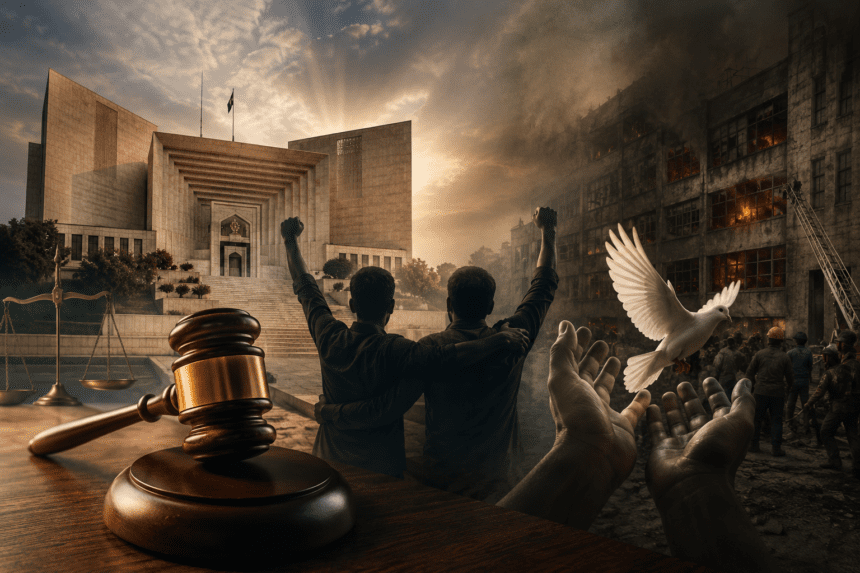
The Supreme Court of Pakistan has overturned the convictions of two Muttahida Qaumi Movement (MQM) workers previously sentenced for their roles in the 2012 Baldia factory fire.
A three-member bench, led by Justice Athar Minallah, acquitted Zubair alias Charya and Abdul Rehman alias Bhola on Tuesday. The court ruled that the prosecution failed to provide sufficient evidence to sustain the convictions, effectively dismantling the case that had lingered in the legal system for over a decade.
The 2012 blaze at the Ali Enterprises garment factory remains one of the deadliest industrial disasters in the country’s history. Over 250 workers perished after being trapped inside the building, where exits had been chained shut.
For years, the fire was framed as a targeted act of arson linked to extortion demands. The Sindh High Court had previously upheld the death sentences for the two men, accepting the prosecution’s theory that the factory was torched after the owners refused to pay “bhatta.”
Tuesday’s verdict marks a sudden shift in that narrative. Justice Minallah questioned the evidentiary standards used by the trial court, noting that the prosecution’s reliance on witness testimony was inconsistent and failed to meet the threshold required for a capital conviction.
The defense argued throughout the appeals process that the confessions were extracted under duress. The Supreme Court’s decision to set aside the sentences suggests the bench found these claims of coerced testimony credible enough to invalidate the lower court’s findings.
The families of the victims, who have spent twelve years seeking justice, now face a legal vacuum. The acquittal leaves the state without a clear culprit for a crime that fundamentally changed industrial safety regulations in Karachi.