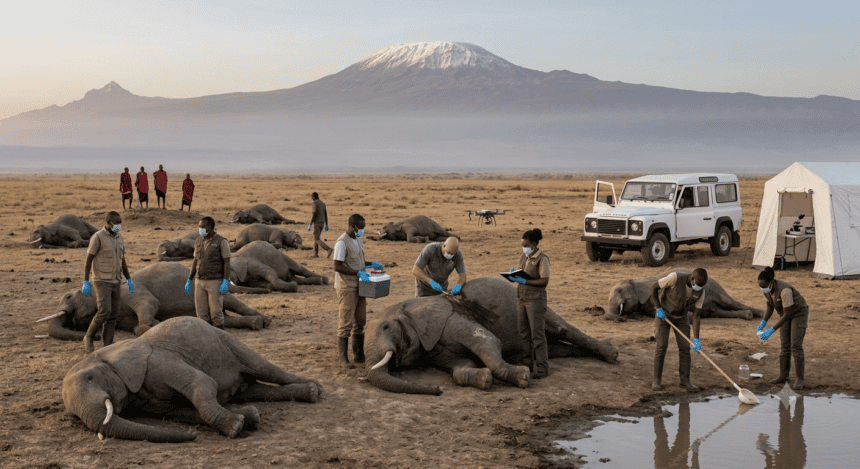
TSAVO, KENYA — Wildlife authorities have launched an emergency investigation following the discovery of 14 elephant carcasses across the Tsavo conservation area. The deaths, spanning multiple locations within the park, have triggered fears of a new wave of poaching or a rapidly spreading environmental hazard.
The Kenya Wildlife Service (KWS) confirmed the discovery Tuesday, stating that specialized veterinary teams are on-site conducting necropsies to determine the cause of death. While initial reports fueled speculation regarding illicit activity, officials have not ruled out natural causes such as severe drought-related stress or toxic contamination of water sources.
“We are treating these deaths with the highest level of urgency,” said a senior KWS official speaking on condition of anonymity. “Losing 14 elephants in such a short window is an anomaly. We need to know if we are facing a criminal element or an ecological crisis.”
Tsavo, Kenya’s largest national park, has long been a frontline in the fight against ivory poaching. While security measures have tightened significantly over the last decade, the sheer scale of this loss suggests a potential breach in park surveillance or a failure in habitat management.
Environmentalists monitoring the region point to the ongoing climate volatility affecting East Africa. Prolonged dry spells often force elephant herds to congregate around limited water holes, increasing the risk of disease transmission or conflict with local pastoralist communities.
“If this is disease, we are looking at a race against time to contain it before it spreads to neighboring herds,” said Dr. Samuel Njoroge, a wildlife biologist familiar with the region. “If it’s poisoning, we need to identify the substance immediately to protect the remaining population.”
The investigation comes at a sensitive time for Kenyan conservationists, who have spent years rebuilding elephant numbers after the devastating poaching spikes of the early 2010s. For now, the park remains under heightened patrol as the government awaits laboratory results from tissue samples collected at the scenes.
The KWS is expected to release a preliminary report on the cause of death within the next 48 hours. Until then, the silence of the Tsavo plains remains a grim reminder of the fragile balance between wildlife and an increasingly hostile environment.