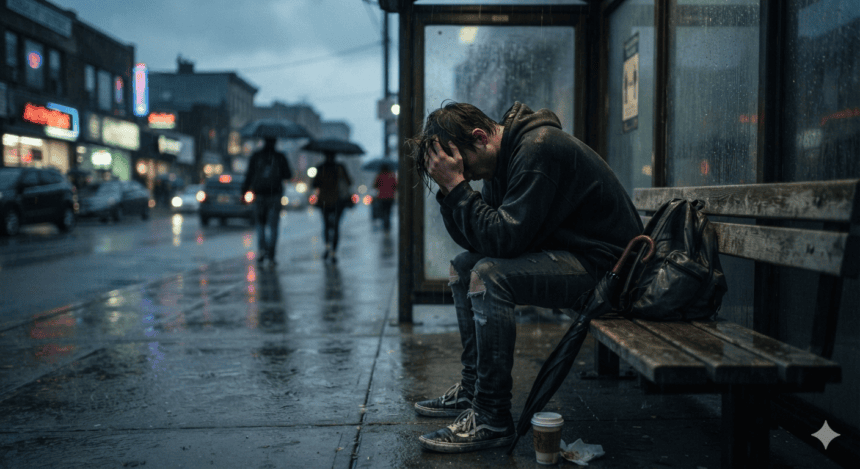
The term “Bummer Time” has migrated from niche social media commentary to the vocabulary of economists trying to explain why, despite cooling inflation and record-high stock indices, the public remains profoundly pessimistic. It isn’t a technical recession, yet it feels like one.
It’s a disconnect between the spreadsheets and the grocery store checkout line.
While the Bureau of Labor Statistics reports inflation has stabilized from its 2022 peaks, the cumulative effect of those years remains etched into household budgets. Prices haven’t dropped; they’ve merely stopped climbing as aggressively. For the average family, a trip to the supermarket costs roughly 20% more than it did three years ago. That isn’t a “soft landing” for the consumer—it’s a permanent reduction in living standards.
Economists point to the “vibecession,” a phenomenon where sentiment data consistently lags behind hard economic output. But calling it a “vibe” dismisses the structural reality. Housing affordability is at its lowest point in four decades. For those under 40, the traditional markers of adulthood—homeownership, starting a family, building savings—now require a level of financial maneuvering that borders on the impossible.
“We aren’t just looking at a dip in the business cycle,” said Sarah Jenkins, a senior labor analyst. “We’re looking at a generation that has done everything right—got the degree, worked the hours—only to find the cost of existence has outpaced their career gains.”
The fatigue is compounded by a sense of powerlessness. When political discourse centers on macro-level growth metrics, the individual worker sees only their own stagnant paycheck. The “Bummer Time” label serves as a shorthand for this exhaustion. It reflects a society that has moved past the shock of the pandemic and into a long, gray slog of maintenance, where the promise of upward mobility feels less like a guarantee and more like a relic.
The data supports this cynicism. Consumer confidence indices remain stuck in a holding pattern, failing to rally even as unemployment claims stay near historic lows. People aren’t worried about losing their jobs—they are worried that their jobs aren’t enough to buy the lives they were promised.
Until wages catch up to the baseline cost of living, the “Bummer Time” won’t end. For now, the economy is growing, but the people powering it are just trying to keep their heads above water.