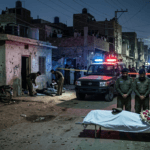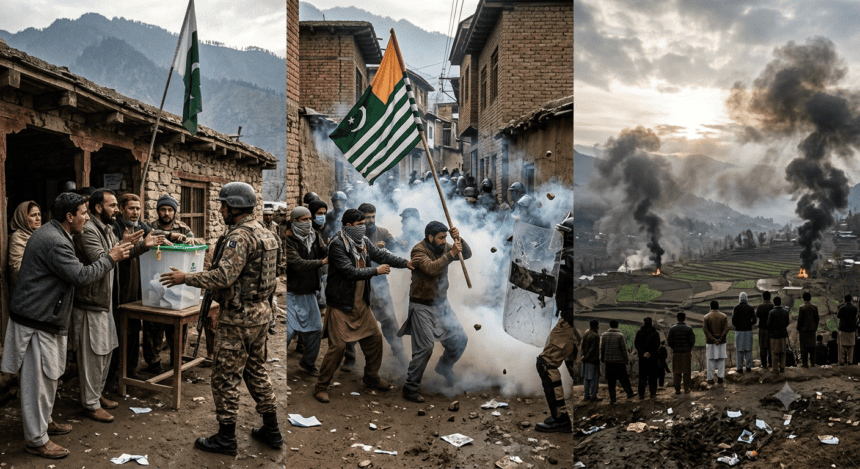
MUZAFFARABAD — Voting began in Pakistani-administered Kashmir under a heavy security blanket today, but clashes between rival political supporters broke out almost immediately, leaving at least three people injured in the first few hours of polling.
Tensions flared in the Neelum Valley district shortly after stations opened at 8:00 a.m. Local police confirmed that supporters of two opposing parties traded gunfire and stones, forcing a brief suspension of the voting process. Authorities responded by deploying paramilitary Rangers to secure the perimeter, though the atmosphere across the region remains volatile.
The Election Commission of Pakistan (ECP) had promised a secure environment, yet the skirmishes highlight the deep-seated polarization gripping the region. Candidates are vying for seats in the Legislative Assembly, an election that has become a proxy battleground for national political parties looking to assert their dominance ahead of federal cycles.
“We saw people running for cover as soon as the shouting started,” said a local shopkeeper near a polling station in Muzaffarabad. “It isn’t about the ballot here; it’s about showing strength on the street.”
While the ECP reports that voter turnout remains steady in urban centers, the intermittent violence in rural pockets threatens to dampen the overall participation rate. Security officials have restricted mobile internet services in sensitive areas, citing the need to prevent the spread of misinformation and the coordination of further unrest.
The opposition has already leveled allegations of rigging, claiming that government-aligned candidates are using state machinery to intimidate voters. The ruling party denies these claims, calling the incidents isolated and blaming “troublemakers” intent on sabotaging the democratic process.
With thousands of police and military personnel stationed at sensitive polling sites, the government is betting that a massive security presence will prevent a full-scale breakdown of law and order. However, as the sun sets and the final votes are cast, the real challenge for the region’s administration will be maintaining control during the sensitive ballot-counting phase.
The results of this vote will dictate the region’s political direction for the next five years, but for now, the primary question is whether the peace can hold until the last box is sealed.