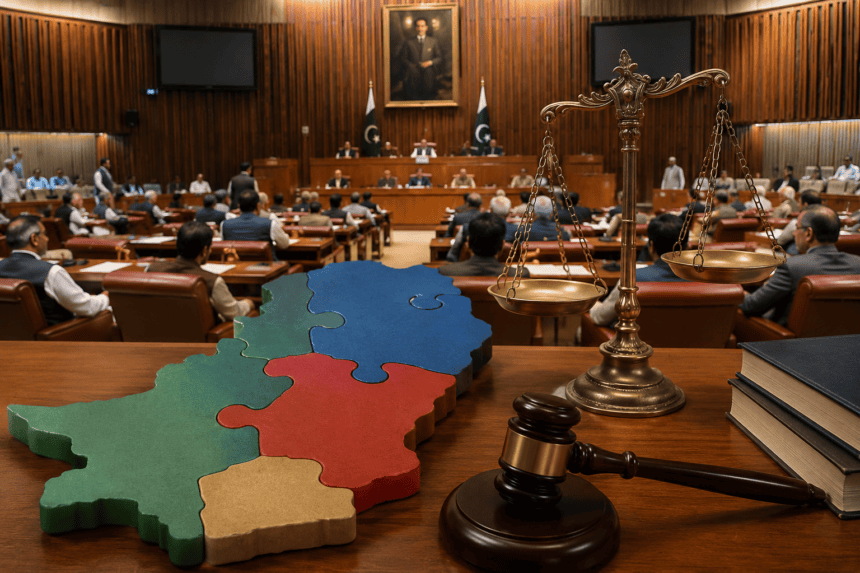
The Senate Standing Committee on Cabinet Secretariat has launched a sharp inquiry into the federal government’s recent decision to revive ministries previously devolved under the 18th Amendment. Senators are questioning both the constitutional validity and the fiscal burden of these moves, arguing that the federal government is effectively rolling back provincial autonomy.
During Tuesday’s proceedings, committee members pressed officials on why functions already transferred to provinces are being reclaimed by federal departments. Senator Saifullah Abro, leading the inquiry, pointedly asked if the cabinet had conducted a legal audit before re-establishing these portfolios. His question remained largely unanswered.
The 18th Amendment, passed in 2010, was designed to shrink the federal footprint by shifting control over subjects like education, health, and agriculture to provincial governments. Critics now argue that the current administration’s push to re-centralize these sectors undermines the spirit of that legislation.
The fiscal reality remains a major point of friction. With the national treasury under immense strain and tax targets frequently missed, committee members questioned the wisdom of creating new administrative layers. They pointed to the overhead costs—offices, staff, and logistics—required to run these revived bodies, funds that many argue should be directed toward debt servicing or essential public services.
Cabinet Division officials defended the restructuring, describing it as an effort to improve “federal oversight and coordination.” They claimed that without these bodies, the federal government lacks the machinery to implement national policies or manage international commitments that overlap with provincial mandates.
The committee was unimpressed. One senator noted that “coordination” has become a convenient umbrella term for expanding federal bureaucracy. He demanded a full breakdown of the budgetary impact of these re-created roles by the next meeting, insisting that the government prove these departments are essential rather than just political reward mechanisms.
The constitutional debate is likely to intensify in the coming weeks. Legal experts tracking the situation suggest that if the federal government continues to reclaim devolved powers, it risks a direct confrontation with provincial cabinets. The Senate panel has now requested the Attorney General’s office to provide an opinion on whether these administrative changes bypass constitutional requirements.
For now, the ministries remain operational, but the committee’s demand for transparency has put the government’s reorganization plan on the defensive. The question isn’t just about efficiency; it’s about whether the federal government has the authority to undo a decade-old constitutional settlement without a formal amendment.