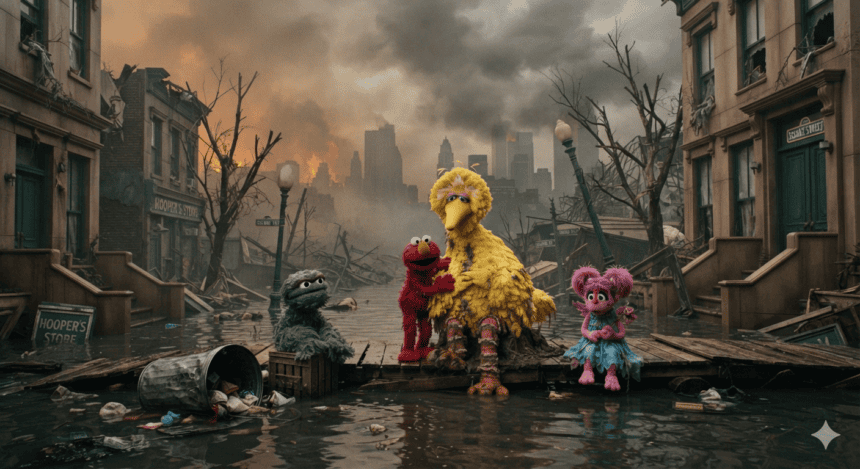
Big Bird and Elmo are moving beyond the alphabet. Sesame Workshop is integrating climate change into its core curriculum, marking a shift for a brand that has spent over five decades focusing on emotional development and basic literacy.
The move isn’t just about polar bears or melting ice caps. It’s about teaching preschoolers how to process the anxiety that comes with living in an era of extreme weather.
“We aren’t looking to scare children,” said a spokesperson for the workshop. “We’re looking to provide them with the vocabulary to understand why their street might flood or why the air quality prevents them from playing outside.”
The production team has already begun testing segments that explain climate concepts through the lens of familiar characters. In one upcoming bit, Oscar the Grouch—the character most associated with trash—will explore the concept of composting and waste reduction. It’s a pragmatic approach to a massive global problem: turning abstract environmental degradation into tangible, household habits.
Industry analysts suggest this pivot is a necessary evolution. As climate-related displacement and heatwaves become more frequent, children are increasingly exposed to environmental news—or the direct consequences of it—before they reach elementary school. Sesame Street’s goal is to turn that exposure into agency.
Critics have occasionally accused the show of being overly political in recent years. Producers counter that the show’s original mission—to help children navigate the world around them—is impossible to fulfill without addressing the changing environment. If the world is getting hotter, the show must explain it, or risk becoming irrelevant to the generation living through it.
The curriculum update arrives alongside a broader push for sustainability across children’s media. Nickelodeon and Disney have both faced pressure to integrate environmental themes, but Sesame Street remains the primary test case for how to distill complex, systemic issues for toddlers.
The success of this initiative will be measured by a simple metric: can a puppet explain a greenhouse gas without losing the attention of a three-year-old? If they pull it off, the show will have solidified its role as a mirror for the modern world—even if that world is looking a lot more scorched than it did in 1969.