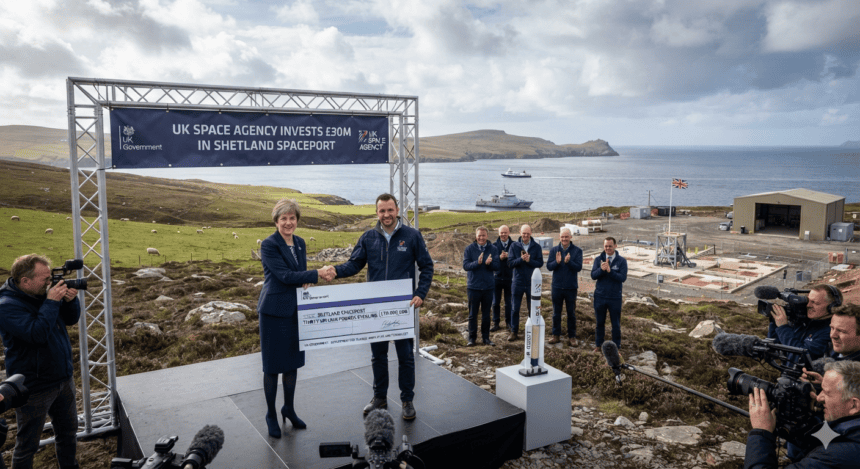
UNST — The SaxaVord spaceport in Shetland has secured £30 million in UK government funding, a financial injection designed to fast-track the site’s capacity for orbital satellite launches.
The funding, channeled through the UK Space Agency, arrives as the facility moves beyond its initial construction phase. It targets the completion of launch pads and the integration of specialized ground infrastructure necessary for the site to become a primary hub for northern polar orbit missions.
This investment isn’t just about concrete and steel. It’s a bet on the UK’s ability to capture a slice of the growing global small-satellite market. Until recently, British companies looking to launch hardware had to rely on sites in the United States or French Guiana. SaxaVord aims to end that dependency.
“This funding allows us to finalize the critical infrastructure needed to hit our launch cadence,” said a spokesperson for the facility. “We aren’t just building a launchpad; we’re building a supply chain.”
The site sits at the northern tip of the UK, an geography that offers a distinct tactical advantage. Its latitude allows rockets to reach polar and sun-synchronous orbits—the most sought-after trajectories for earth-observation and communications satellites—without flying over populated landmasses.
The project has faced a turbulent path to this point. Planning disputes, environmental hurdles, and the logistical nightmare of transporting heavy aerospace equipment to a remote island chain have slowed progress. Even with the new funding, the facility faces a tight regulatory schedule to secure the necessary safety licenses for orbital flights.
Industry analysts suggest the £30 million will likely be earmarked for the “Launch Pad Fredo” and “Launch Pad Elizabeth” sites, which are intended to support the heavy-lift requirements of medium-sized orbital rockets.
The pressure is now on the SaxaVord team to deliver. With the global space race shifting toward commercial viability and rapid-fire launches, the facility must prove it can transition from a construction project into a functioning spaceport.
For the Shetland community, the stakes are equally high. The government’s commitment signals a long-term interest in turning these remote islands into a permanent fixture of the European aerospace sector. Whether the site can meet the high expectations of its investors—and the demanding timeline of the satellite industry—will be tested when the first orbital countdown begins.