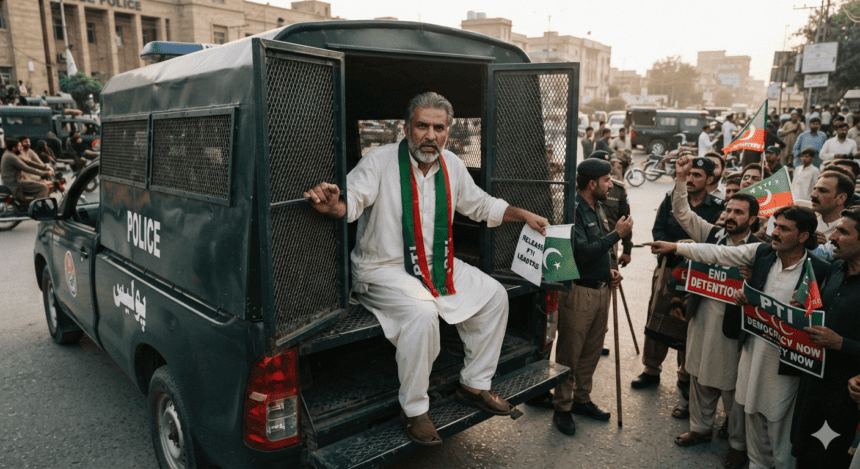
Sohail Afridi, a prominent local Pakistan Tehreek-e-Insaf (PTI) figure, turned a routine police transport into a site of defiance today. As officers attempted to move detained party leaders, Afridi climbed into the police van himself, refusing to exit until authorities addressed his protest against the ongoing crackdown on his party members.
The scene unfolded outside a local courthouse where tensions have simmered for days. Police moved to transport detained PTI leadership to central holding facilities, but Afridi blocked their path. By occupying the vehicle, he forced a standoff that brought the transport process to a standstill for nearly an hour.
For the PTI, this maneuver is less about the van and more about the optics of resistance. The party has been grappling with a wave of arrests following recent political unrest, and local leaders are increasingly using civil disobedience to keep their movement in the public eye. Afridi’s decision to join the detainees behind bars — even if voluntarily — serves as a calculated signal to the party’s base that the leadership remains unbowed.
Police officials on the scene initially appeared caught off guard. Officers attempted to negotiate his exit, but Afridi remained unmoved, citing the arrests as politically motivated and legally baseless. He demanded a clear timeline for the release of his colleagues, dismissing the standard procedural explanations provided by the officers on duty.
Legal analysts point out that while such acts of defiance often generate significant social media traction, they rarely alter the immediate legal trajectory of the detainees. The charges against the PTI leadership, ranging from public order violations to more serious allegations of inciting unrest, remain firmly within the court’s jurisdiction.
The standoff eventually ended when additional police reinforcements arrived to clear the area. Afridi was removed from the vehicle and taken into custody, a move that his supporters immediately framed as further evidence of the government’s intolerance for political dissent.
As the van finally pulled away, the crowd gathered outside the courthouse grew louder. For the local administration, the incident underscores a growing challenge: managing a political opposition that no longer fears the inside of a police transport.