

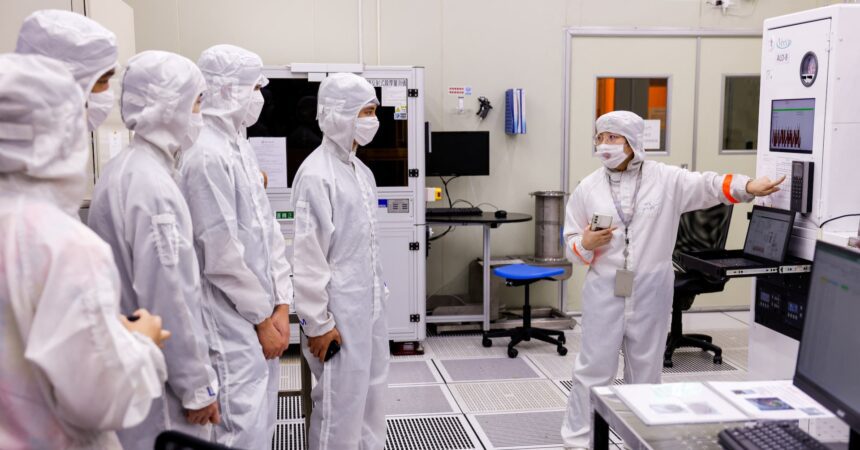
TAIPEN: Taiwan is stepping up efforts to cultivate a new generation of semiconductor talent through international summer camps and university programs, as the island battles a severe labor shortage in its most critical industry.
With a birth rate in steep decline and tens of thousands of chip-related jobs projected to go unfilled, U.S. chip design software giant Synopsys has launched bilingual (Mandarin and English) semiconductor camps in Taiwan. This year’s program attracted students from eight countries, including 16 year old Nicolas Chueh, who expressed interest in chip technology after realizing its importance in gaming and AI.
“There is an urgent need to strengthen STEM education from an early age,” said Robert Li, Synopsys’s Taiwan chairman. He noted that the camps are designed to spark long-term interest and potentially train future leaders of the semiconductor sector. Synopsys charges about T$33,000 ($1,103) for its English program and T$10,900 for the Mandarin version. The company is also considering holding similar camps overseas.
The urgency is underscored by industry data: semiconductor job vacancies in Taiwan surged from 19,401 in Q2 2020 to 33,725 in Q2 2025, according to local HR firm 104 Corporation. At the same time, annual births dropped from over 210,000 in 2014 to just 135,000 in 2024, while STEM graduates fell by 15%.
Industry leaders warn that Taiwan’s global semiconductor dominance led by giants such as TSMC, MediaTek, and UMC could be at risk without new talent. “Growth has been faster than our schools can produce engineering talent each year,” said Leuh Fang, chairman of Vanguard International Semiconductor.
In response, universities are launching international programs. National Taiwan University recently started a global undergraduate semiconductor course that combines technical training with Mandarin lessons to help foreign students settle in Taiwan. The program already includes over 40 students from more than 10 countries.
TSMC has also backed an initiative in Germany’s Saxony state to send German students to Taiwan for academic and internship opportunities. Meanwhile, National Yang Ming Chiao Tung University, supported by TSMC, has introduced outreach programs for children as young as 10, using interactive tools and online games to make chip science appealing.
“The issue everyone is discussing now is where the future workforce will come from,” said NYCU President Chi-Hung Lin. “If children are curious now, they’re more likely to embrace this work later.”