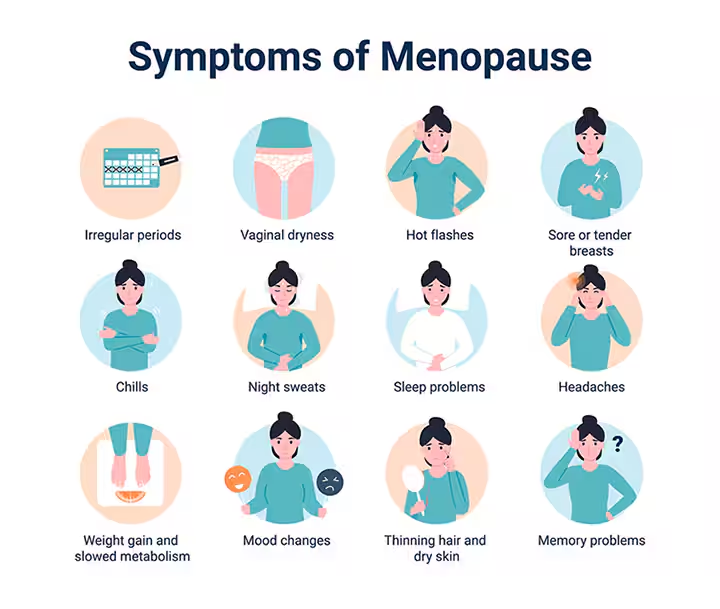
The medical establishment spent decades labeling hot flashes as the primary marker of menopause. That narrow view is shifting. For women between 40 and 65, the transition encompassing perimenopause, menopause, and post-menopause is a complex physiological overhaul that extends far beyond temperature spikes. Perimenopause often begins in the early 40s, sometimes masquerading as simple stress or aging.
Estrogen levels begin their erratic decline, triggering a cascade of symptoms that catch many off guard. It’s not just about ending periods; it’s about the body recalibrating its hormonal baseline. “Patients often come in convinced they’re dealing with early-onset anxiety or burnout,” says Dr. Elena Rossi, a specialist in women’s midlife health.
“They don’t realize their brain chemistry is reacting to the same hormonal instability that causes physical symptoms. It’s a systemic change, not a localized one.” Cognitive shifts are frequently cited, yet rarely discussed in clinical settings. Many women report “brain fog” a persistent difficulty with concentration and memory retrieval.
This isn’t cognitive decline; it’s a neurological response to fluctuating estrogen, which plays a significant role in neurotransmitter function. When these levels drop, mental clarity often follows suit. Sleep disruption remains a cornerstone of the experience. Beyond the night sweats that wake a person, insomnia often settles in as a primary symptom.
The body’s sleep-wake cycle becomes fragile, turning minor stressors into major hurdles. Fatigue becomes the default state, impacting professional performance and personal relationships. Physically, the body changes in ways that are often dismissed as “just getting older.
” Joint pain, skin dryness, and unexplained weight gain—particularly around the midsection are common. These aren’t just cosmetic or minor discomforts; they represent metabolic shifts that require different nutritional and exercise approaches than those used in one’s 30s.
The timeline varies wildly. While the average age of menopause is 51, perimenopause can last anywhere from a few years to over a decade. By the time a woman reaches 65, she has likely navigated the shift into post-menopause, where the focus moves from managing hormonal volatility to mitigating long-term risks like bone density loss and cardiovascular changes. Ignoring these symptoms doesn’t make them disappear. It only makes them harder to manage.
The most effective approach for women in this age bracket is documenting the changes however minor and recognizing that these are not independent issues, but parts of a singular, biological transition. Midlife health is no longer a conversation about “managing a phase.
” It is about understanding the systemic reality of the female body as it enters a new, permanent state of equilibrium.