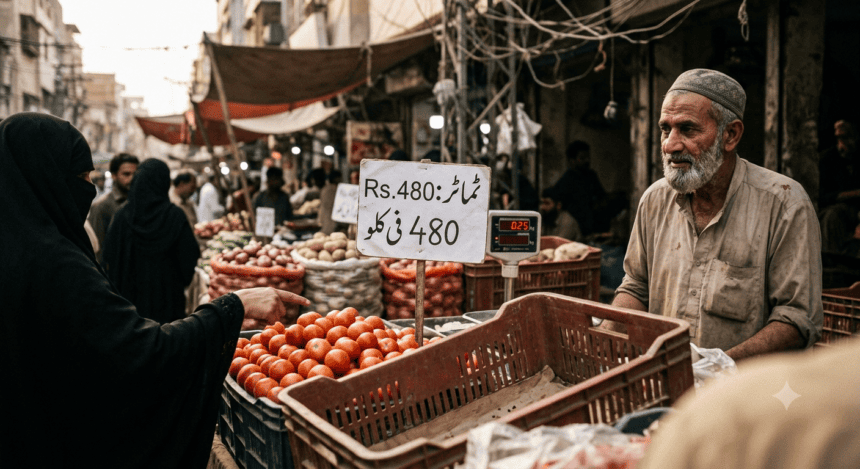
Tomato prices have surged sharply across Pakistan, placing an additional financial burden on households already struggling with rising food inflation. Retail markets in several cities have reported significant increases, with consumers expressing concern over the continued rise in the cost of the essential kitchen staple.
According to market traders, the price hike has been driven by a combination of factors, including reduced local supplies, seasonal fluctuations, transportation costs and increased demand. Adverse weather conditions in some agricultural regions have also affected tomato production and delayed fresh arrivals to wholesale markets.
Retailers say that the limited availability of tomatoes has led to higher wholesale prices, which are ultimately being passed on to consumers. In many markets, shoppers have either reduced their purchases or are seeking cheaper alternatives as household grocery bills continue to rise.
The increase in tomato prices has also affected restaurants, hotels and food vendors, who rely heavily on the vegetable for preparing a wide range of dishes. Many businesses fear that if prices remain high, operating costs will continue to increase, potentially leading to higher menu prices for customers.
Agriculture and market experts believe prices could stabilize once fresh supplies arrive from major producing regions. However, they warn that any further disruption in production, transportation or weather conditions could prolong the current price trend.
Consumers have urged the authorities to monitor market conditions, prevent profiteering and ensure a steady supply of vegetables to help control food inflation and protect low-income families from further financial pressure.