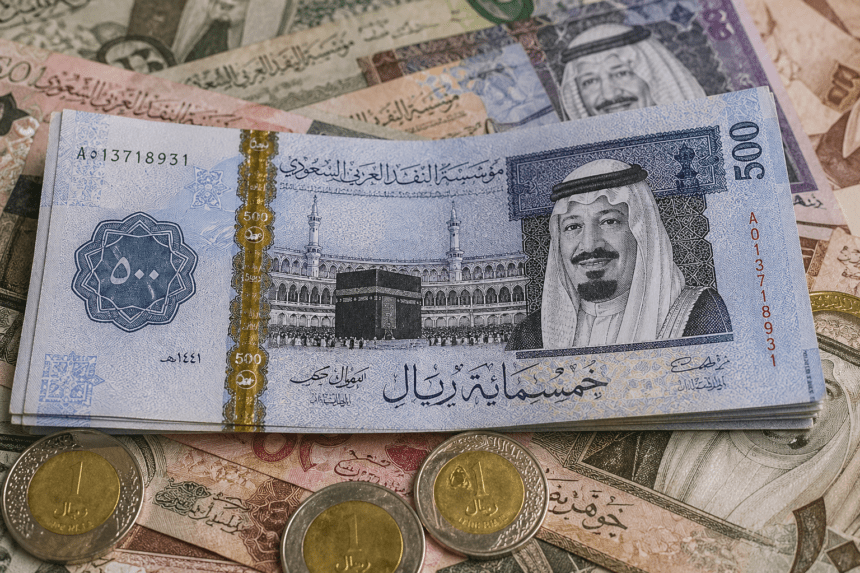
The Saudi Riyal traded close to Rs74.37 against the Pakistani Rupee in the interbank/reference market on April 29, 2026, while the open-market selling rate hovered around Rs75.40, keeping the gap between official and retail exchange channels in place for another day. Business Recorder listed 1 SAR at Rs74.37, and Exchange-Rates.org’s 2026 history page shows the Riyal at about Rs74.318 on April 29.
In the open market, local rate trackers showed the Saudi currency in a slightly firmer retail band. UrduPoint’s 30-day table listed the April 29 buying rate at Rs74.40 and selling at Rs75.40, while Hamariweb’s Pakistan open-market pages also placed the Riyal at Rs75.40 around that date.
That means remittance senders, Umrah travellers, and families planning Saudi-related payments were still dealing with a fairly familiar pattern: the interbank figure stayed in the mid-Rs74 range, but actual consumer-facing exchange counters were charging closer to the mid-Rs75 range. In plain terms, the retail market remained about one rupee above the interbank/reference level on the day. This is an inference based on the published interbank/reference and open-market quotes.
The broader picture hasn’t moved dramatically either. Exchange-Rates.org’s 2026 history shows the average SAR/PKR rate so far this year at 74.486, with a 2026 high of 75.114 on January 8 and a low of 74.156 on April 3. So April 29 sat near the lower-middle end of the year’s trading range rather than marking any sharp breakout.
Officially, the State Bank of Pakistan’s mark-to-market page was updated as of April 29, 2026, confirming the central bank’s daily exchange-rate reference framework was current around the same session. The SBP page itself is a reference board rather than a consumer cash quote, but it remains one of the main official benchmarks used across the market.
For households, the takeaway is pretty simple: 1,000 Saudi Riyals translated to roughly Rs74,370 at the interbank/reference rate, versus about Rs75,400 at open-market selling levels on April 29. That difference may not look huge at first glance, but for larger exchanges it adds up quickly, especially for workers sending money home or passengers buying Riyals before travel. This calculation is based directly on the published per-riyal rates.