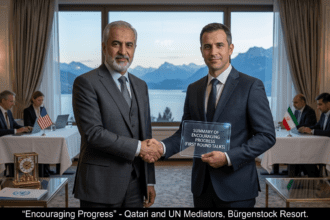
Donald Trump has extended the de facto cease-fire with Iran, signaling a shift toward sustained diplomatic maneuvering rather than immediate escalation. The move, confirmed by senior aides late Tuesday, buys the administration breathing room as both sides navigate the wreckage of recent regional tensions. The extension isn’t a formal treaty. It’s a tactical pause—a quiet agreement to hold fire while negotiators test the waters for a broader framework. Trump, speaking briefly from Mar-a-Lago, described the current stability as a “necessary window” to address core disputes without the immediate threat of a wider conflict. Why does this matter now? The risk of miscalculation between Washington and Tehran has been high for months. By formalizing this pause, the White House is betting that economic pressure, paired with direct, low-profile communication, can yield results that military posturing has failed to produce. The strategy relies heavily on back-channel talks. While the State Department remains tight-lipped on the specific intermediaries, officials confirmed that “multiple nodes of communication” are active. These channels are the primary reason the status quo has held despite the simmering grievances on both sides. Critics in Congress aren’t convinced. Some Republican hawks argue that delaying a decisive response only invites further Iranian aggression. They point to the persistent regional proxy activity as proof that a cease-fire is merely a delay tactic for Tehran to regroup. The administration’s counter-argument is simple: escalation is expensive and unpredictable. Officials familiar with the strategy suggest that Trump prefers a deal that allows him to claim a victory in containment, rather than committing the U.S. to a protracted military engagement that lacks a clear exit strategy. For now, the guns remain silent along the most sensitive flashpoints. Whether this holds depends on if these back-channel talks can move from managing crises to actually resolving them. The White House says the clock is ticking, but for the first time in this cycle, it’s ticking without the immediate threat of a strike.
Trump Extends Iran Cease-Fire, Citing ‘Back-Channel’ Progress


Leave a Comment