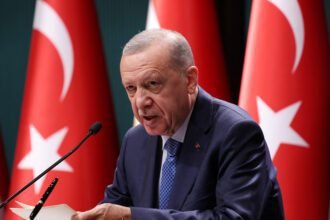
Turkish missile maker Roketsan is trying to convert a wartime surge in demand into a bigger place in the global arms market, as Ankara pushes a broader goal of lifting Türkiye into the world’s top 10 defense exporters by 2028. President Recep Tayyip Erdoğan repeated that target on April 7 at the opening of new Roketsan facilities in Ankara, saying Türkiye wants to hit $11 billion in defense and aerospace exports in 2028. He also said the sector’s exports topped $10 billion in 2025 and reached $1.91 billion in the first quarter of 2026, up 12.1% year on year.
For Roketsan, the pitch is simple: build faster, deliver more, and be ready when customers come calling. The company has opened new production facilities as part of an investment program Erdoğan valued at $3 billion in total, with about $1 billion already completed. Breaking Defense reported that the first phase includes a warhead plant, missile integration facilities and a fuel production facility in Kırıkkale, while Erdoğan said the expansion is meant to speed up production of missile and air-defense systems.
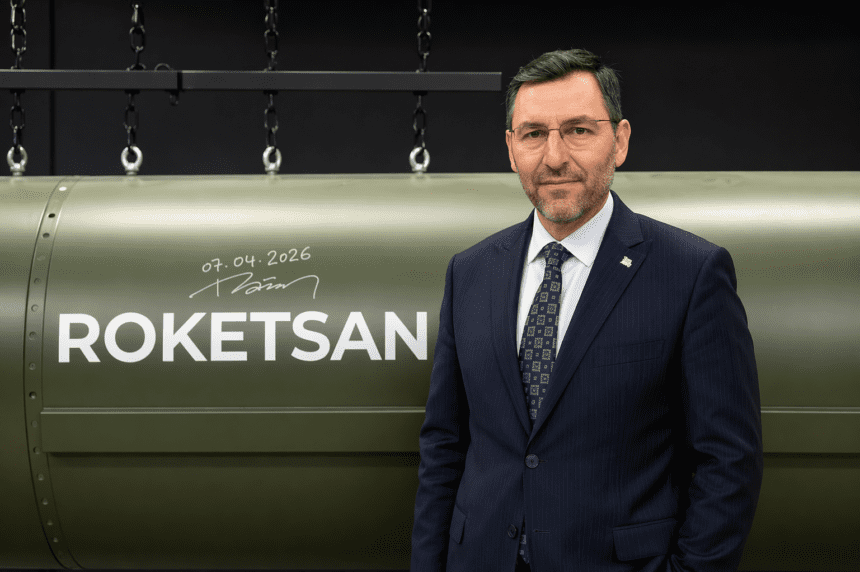
Roketsan chief Murat İkinci has been signaling for months that 2026 is supposed to be the payoff year. In remarks published in January, he said 2026 would be the year earlier work in ballistic missiles, air-defense systems, drone technologies and other programs would “bear fruit,” turn into products and move into serial production. He also said Roketsan’s turnover rose by 50% to more than $2 billion in 2025, while exports climbed by more than 50% to nearly $750 million.
The timing matters. Türkiye’s defense industry is expanding just as the Middle East has been rattled by the 2026 Iran war and its spillover effects, which have exposed how quickly countries can burn through missile-defense stocks and precision munitions. Recent reporting has shown Gulf states scrambling to strengthen air and missile defenses after intense attacks, while U.S. arms packages for the region have also focused heavily on countering missile and drone threats. That does not mean every new Roketsan order is directly tied to the conflict, but it does mean the regional security environment is making products like missiles, smart munitions and layered air-defense systems easier to sell.
Roketsan is also not starting from zero overseas. The company already has export and industrial cooperation deals in place, including a joint production arrangement with Saudi Arabian Military Industries and a technology-transfer agreement with Indonesia for its Çakır cruise missile. Those partnerships matter because they show Ankara is no longer talking only about national self-sufficiency; it is increasingly trying to turn Turkish defense manufacturing into a long-term export business with foreign production links built in.
Still, there is a gap between ambition and rank. Erdoğan’s top-10 goal is a political benchmark as much as a commercial one, and the path there depends on more than opening factories. Roketsan and the wider Turkish defense sector will need to keep scaling output, secure more export approvals, and prove they can deliver consistently in a market crowded with U.S., European, Israeli, South Korean and increasingly other Asian suppliers. What is clear already is that Ankara sees this moment as an opening: regional war has made demand more urgent, and Roketsan wants to be one of the companies cashing in on that urgency.