
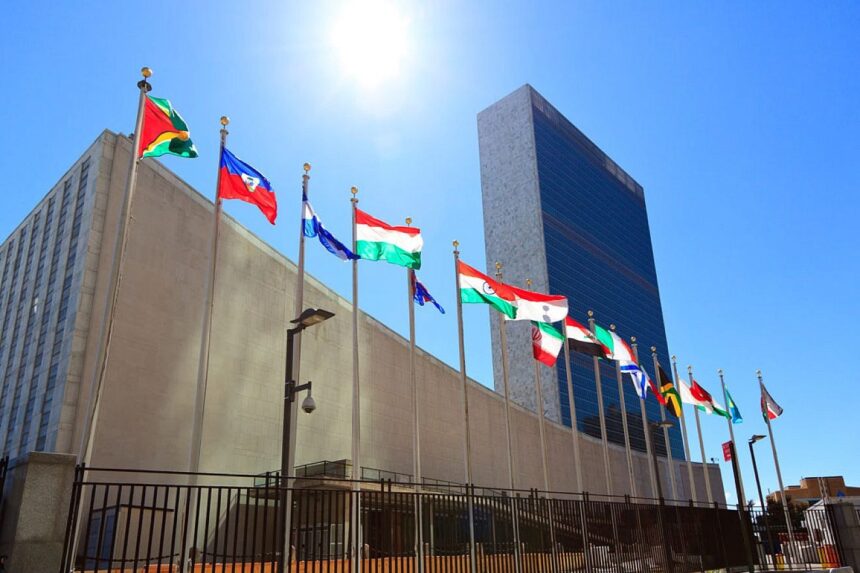
The UN Security Council blocked a resolution by China and Russia that sought to extend sanctions relief for Iran under the 2015 nuclear deal, leaving penalties set to snap back this weekend.
The draft resolution, aimed at prolonging the Joint Comprehensive Plan of Action (JCPOA) and its endorsement through Resolution 2231 until April 2026, secured only four votes in favour. Nine members voted against it, while two abstained, far short of the approval needed.
With the failure, sanctions lifted under the JCPOA will be automatically re-imposed starting Saturday evening. This comes after France, Germany, and the United Kingdom formally accused Tehran of “significant non-performance” last month, triggering the agreement’s “snapback mechanism.”
Western powers, including the UK and the US, argued that Iran’s nuclear advances had broken trust with the global non-proliferation regime. UK Ambassador Barbara Woodward stressed that Iran’s growing stockpile of highly enriched uranium has no “credible civilian justification,” adding that the International Atomic Energy Agency (IAEA) cannot verify the programme’s peaceful intent.
The United States welcomed the Council’s rejection. Deputy Representative Dorothy Shea described the resolution as “a hollow effort” that would have excused Tehran’s violations without accountability.
In contrast, Russia and China condemned the outcome. Moscow’s Deputy Ambassador Dmitry Polyanskiy accused opposing nations of abandoning diplomacy, while Beijing warned the decision risks igniting a new regional security crisis.
The 2015 nuclear agreement, once hailed as a cornerstone of global security, now faces a renewed breakdown as sanctions return and trust among major powers further erodes.