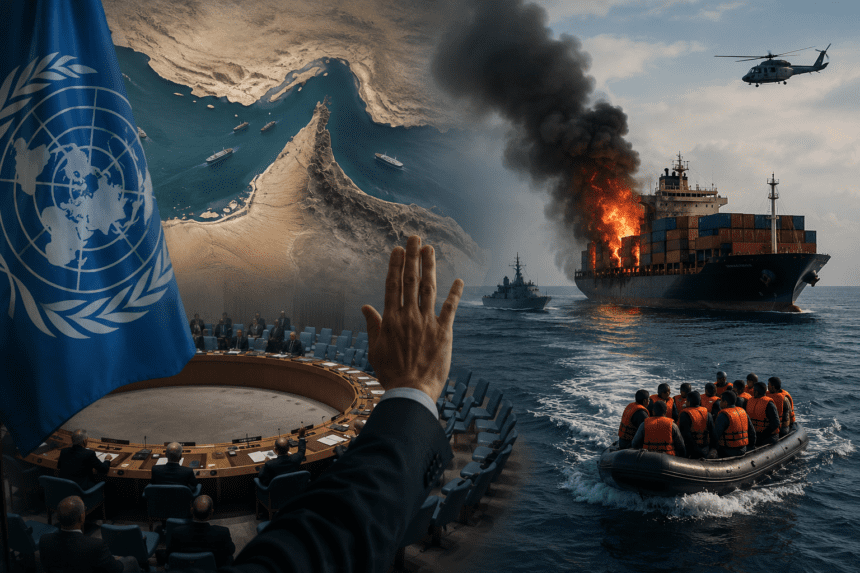
The United Nations has suspended its contingency plans for the Strait of Hormuz after a commercial cargo vessel came under direct fire earlier this week. The move effectively shelves a critical maritime safety corridor designed to protect civilian shipping in one of the world’s most volatile waterways.
The attack, which involved small fast-attack craft and projectile fire, left the bridge of the unnamed vessel partially disabled. No casualties were reported among the crew, but the incident forced the UN’s maritime safety task force to pull back its observers.
For the shipping industry, the suspension is a blow to stability. Roughly 20% of the world’s oil supply passes through the strait daily. With the UN’s neutral monitoring now off the table, insurance premiums for vessels navigating the passage are expected to spike by morning.
“Our teams cannot operate in an environment where they are indistinguishable from military targets,” a UN spokesperson told reporters in New York. The spokesperson declined to specify which militant group or state actor was suspected of the strike, citing the ongoing nature of the security assessment.
Regional analysts suggest the attack was a calculated signal rather than a random act of piracy. By targeting a vessel that was ostensibly under the protection of international monitoring, the aggressors have effectively challenged the UN’s ability to project neutrality in the Persian Gulf.
The maritime industry is now scrambling. Shipping firms are quietly rerouting vessels toward longer, costlier paths around the Arabian Peninsula. While major tanker operators have not yet issued a formal halt on all transit, the unofficial “wait and see” approach is already causing supply chain bottlenecks at ports in the UAE and Oman.
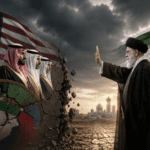
Tehran has denied any involvement in the incident, labeling the reports as “Western disinformation” aimed at justifying a larger naval presence in the region. Meanwhile, the UN has not provided a timeline for when or if the evacuation corridor might be reinstated.
As insurance rates climb and shipping companies weigh the risk of transit, the Strait of Hormuz remains a bottleneck that the global economy can ill afford to lose. For now, the ships keep moving, but the safety net is gone.