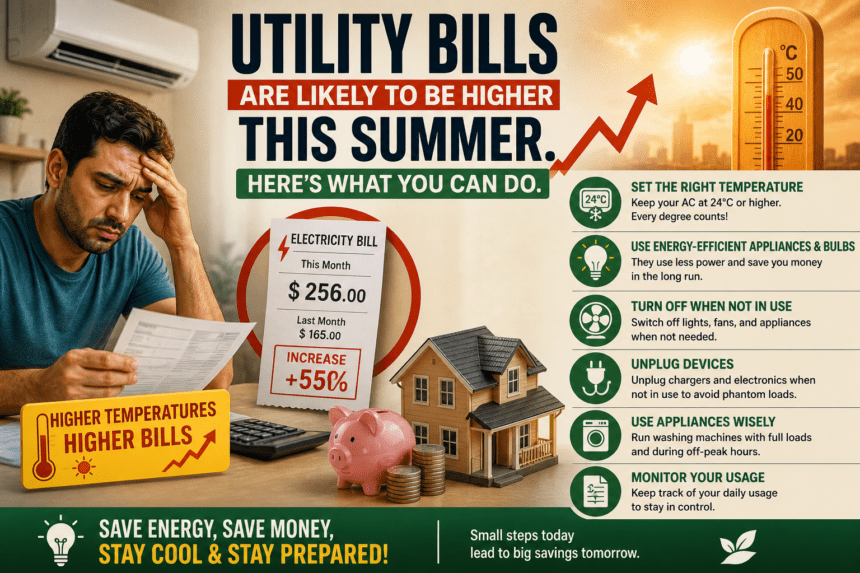
American households are likely to face higher electricity costs this summer, even if milder weather softens the blow in some places. The U.S. Energy Information Administration says residential electricity prices are expected to be higher this summer across the country, though somewhat lower electricity use than last year could offset part of that increase for some homes. At the same time, approved utility rate hikes are already pushing costs up for tens of millions of customers.
That means the summer bill problem is not just about heat. It is also about the underlying price of power. Federal energy forecasts say retail electricity prices have been rising faster than inflation since 2022 and are expected to keep increasing through 2026, with some regions likely to feel the pressure more than others. So even a household that uses about the same amount of power as last year may still end up paying more.
For most families, air conditioning is where the real money goes. The Energy Department says cooling is one of the biggest summertime energy expenses, and nearly nine in 10 U.S. homes use some form of air conditioning. That is why even small changes in cooling habits can make a noticeable difference over a full billing cycle.
The simplest step is to keep heat out before your AC has to fight it. Federal energy guidance recommends using window coverings during the day to reduce heat gain, especially on sun-facing windows. It also advises sealing air leaks and checking insulation where possible, because cooled air escaping from the house means your system has to run longer and cost more.
The next step is using your cooling system more carefully. The Energy Department recommends adjusting your thermostat to the highest comfortable setting, using fans to improve comfort, and keeping your air-conditioning equipment maintained. A clogged filter or poorly maintained unit can quietly waste energy all season.
Households can also cut waste outside the AC itself. Turning off unnecessary lights, avoiding heat-producing appliances during the hottest part of the day, and using major appliances more efficiently can all help reduce total electricity use. A home energy assessment can also show where the biggest losses are, which matters because not every house wastes energy in the same way.
For families already under financial pressure, the warning signs are serious. Recent federal reporting found utilities disconnected electricity 13.4 million times in 2024, underscoring how quickly high bills can turn into hardship. That makes early action important: review your utility’s payment options, ask about budget billing or assistance programs, and start cutting usage before the hottest stretch of summer arrives.
In the end, the outlook is pretty clear. Power prices are still rising, summer cooling remains expensive, and many households will feel the increase. But the best way to blunt the hit is usually not one dramatic fix. It is a handful of small, practical steps taken early — before the next high bill lands in the mailbox.
Urdu