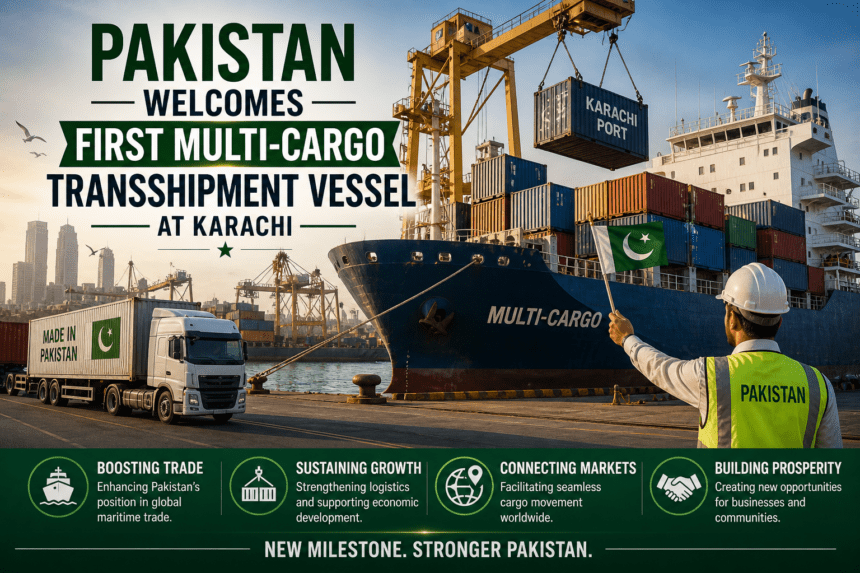
Pakistan has moved a step closer to its ambition of turning Karachi into a regional maritime hub, as the country opens the door to a broader kind of transshipment business that now includes bulk cargo, break-bulk shipments and vehicles for the first time under a newly approved framework. The policy shift comes after the government formally allowed these cargo categories under transshipment arrangements, a move officials have described as a landmark expansion of port operations.
The significance of the development is not just symbolic. Until now, Pakistan’s transshipment model was far more limited, but the new framework is designed to let Karachi handle a wider mix of cargo moving between international destinations without requiring Pakistan to be the final market. That matters because it gives the port a chance to compete for business that might otherwise pass through Gulf hubs or other regional gateways.
The timing is no accident. Karachi has already seen a sharp rise in transshipment volumes in 2026 as regional shipping disruptions pushed cargo away from traditional Gulf routes. In March alone, port officials and trade reporting said Karachi processed more transshipment containers in a matter of weeks than it had during the whole of 2025, underlining how quickly trade flows can shift when regional routes come under pressure.
To capitalize on that opening, the government has paired the policy change with incentives aimed at foreign-flagged vessels. Those measures include reduced duties and port charges, along with changes to cargo thresholds meant to make Karachi more attractive to shipping lines looking for a cost-effective alternative. Officials have framed the package as part of a broader effort to improve port competitiveness and lock in traffic that has recently been diverted toward Pakistan.
If Karachi can sustain this momentum, the payoff could stretch beyond the port itself. Higher transshipment activity can mean more vessel calls, more customs and logistics work, and a stronger position for Pakistan in regional trade networks. But it also brings pressure. Reports in recent weeks have pointed to congestion concerns and the need for faster operational planning so the port can handle increased cargo volumes without bottlenecks.
So the arrival tied to this expanded framework is more than a shipping update. It is part of a larger test: whether Pakistan can turn a temporary regional disruption into a lasting commercial advantage and whether Karachi can evolve from a domestic gateway into a serious transshipment player for the region.