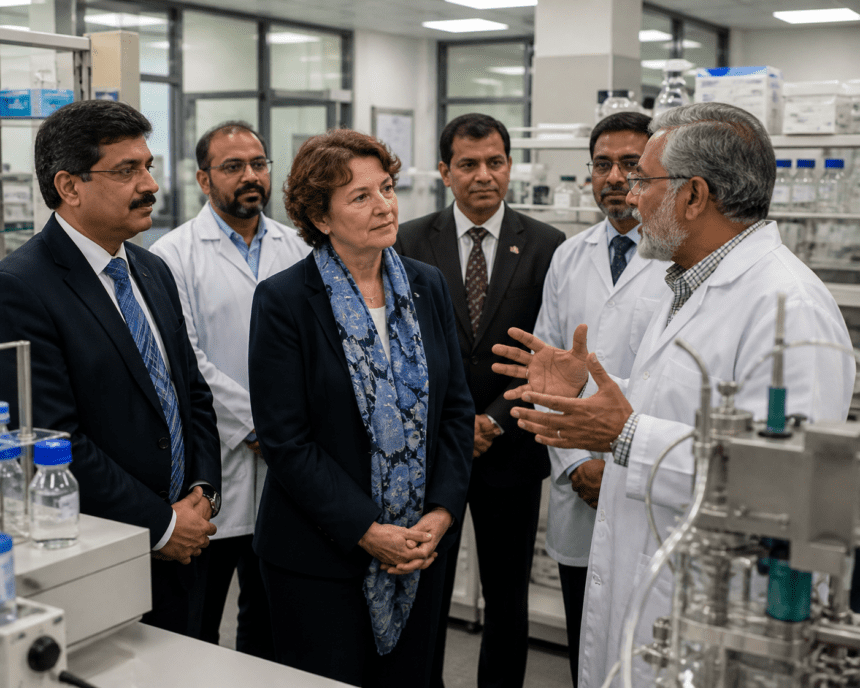
A senior UNESCO representative toured the International Center for Chemical and Biological Sciences (ICCBS) at the University of Karachi this week, marking a push to deepen institutional ties in scientific research and sustainable development. The visit focused on the center’s ongoing work in natural product chemistry and its role as a regional hub for training researchers from developing nations.
Dr. M. Iqbal Choudhary, the director of ICCBS, led the delegation through the facility’s high-tech laboratories, showcasing projects that range from drug discovery to environmental monitoring. For the international agency, the goal is clear: integrating regional research hubs into a broader global knowledge network.
The ICCBS has long held the status of a UNESCO Category-2 Center, a designation that requires rigorous adherence to international research standards and a commitment to knowledge sharing across borders. “Scientific cooperation isn’t just about sharing data,” the visiting official noted during a brief discussion with faculty. “It’s about ensuring that the infrastructure for innovation is accessible to those who need it most, regardless of their geography.
” The center’s current research portfolio—particularly its efforts in identifying plant-based compounds for medical use has gained traction in international journals. However, the dialogue during this visit shifted toward the practical hurdles researchers face in Pakistan, including funding gaps and the need for more robust intellectual property frameworks to protect local discoveries. ICCBS officials highlighted the center’s success in training over 1,000 scholars from across the Global South.
By hosting researchers from Africa and Central Asia, the facility functions as a diplomatic bridge, using science to foster relations where traditional diplomacy often stalls. Despite the positive reception, the visit underscored a persistent reality for Pakistani academia: reliance on international partnerships to sustain high-end research.
As the tour concluded, the focus turned toward the next phase of collaboration, with both sides discussing potential joint grants aimed at tackling climate-related health challenges.
The partnership remains a critical lifeline for the university, offering more than just prestige it provides the technical validation necessary to compete on the global stage. Whether this visit translates into tangible new funding remains the primary concern for the faculty as they look toward the coming academic year.