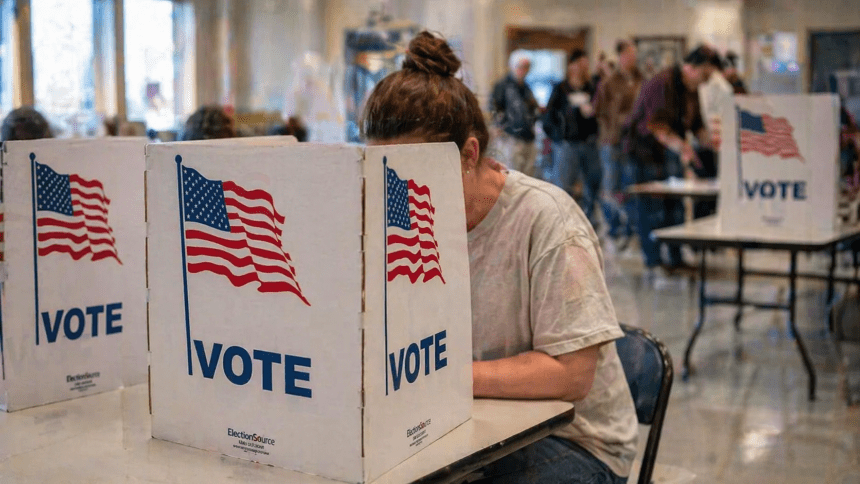
Richmond, VA — April 22, 2026 — Virginia voters narrowly approved a high-stakes redistricting measure on Tuesday, a decision that could reshape the state’s congressional map and provide Democrats with a critical advantage in the upcoming midterm elections.
The referendum passed with roughly 51.5% of the vote, reflecting a deeply divided electorate. The measure allows the Democratic-controlled state legislature to redraw Virginia’s U.S. House districts ahead of the usual post-census schedule, potentially altering the political landscape in a state that has long been considered a swing region.
A Shift in Political Power
The newly approved map is expected to tilt several districts in favor of Democrats. Political analysts project that the measure could increase Democratic representation from six to as many as ten of Virginia’s eleven congressional seats, giving the party a stronger hand as it seeks to reclaim the U.S. House in November.
Governor Abigail Spanberger hailed the vote as “a meaningful step toward fair representation and a more balanced political map,” while House Minority Leader Hakeem Jeffries called it “a strategic victory for voters who want their voices heard.”
Republicans criticized the move as partisan gerrymandering. Former President Donald Trump and other GOP leaders argued that it constitutes a power grab, designed to undermine competitive elections. Legal challenges have already been filed, and the Virginia Supreme Court may ultimately determine whether the new maps will be implemented in time for the midterms.
National Implications
Control of the House is expected to be razor-thin, making even a few extra seats in a single state politically significant. Analysts suggest that the redistricting could help Democrats secure up to four additional congressional seats, potentially swinging national momentum in their favor.
The Virginia vote comes amid broader nationwide battles over redistricting. Republican-led states have pursued their own maps to solidify their positions, often facing criticism for undermining democratic representation. Virginia’s decision represents a counter-move that could influence strategies in other closely contested states.
Although the referendum has passed, the legal process may delay the implementation of the new maps. Courts will review challenges alleging that the measure violates principles of fairness and constitutional limits. The timeline for finalizing the new districts remains uncertain, but political observers say the decision has already energized campaigns on both sides.
As voters head to the polls in November, Virginia’s redistricting measure underscores how local decisions can have profound national consequences. In a political climate defined by tight margins and fierce partisan battles, the outcome of this measure could reverberate far beyond the state capital.