

n a country where female artists have often struggled for visibility, Voice of Her has emerged as a bold new platform determined to change the rhythm of Pakistan’s music industry.
Founded by singer and television personality Samra Khan, Voice of Her positions itself as the first dedicated platform to celebrate, support, and promote Pakistani women in music and art. Its mission? Simple yet powerful — to hand women the microphone and the stage that’s too often been kept out of reach.
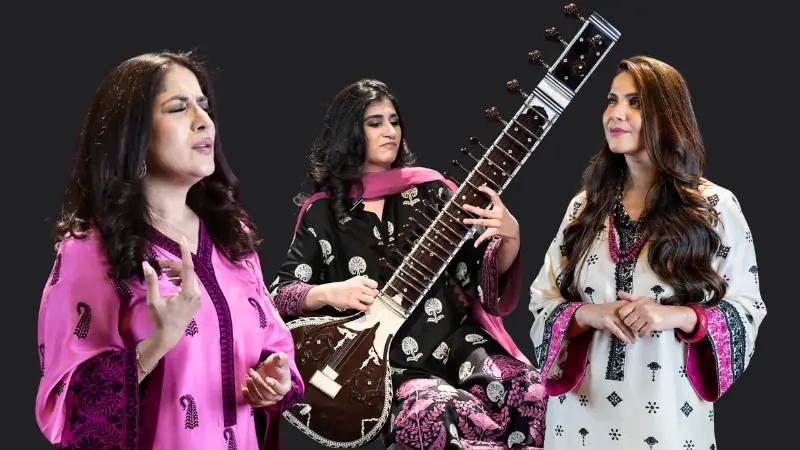
The initiative made its first major splash with a live concert at Karachi’s National Academy of Performing Arts (NAPA) on October 26, 2025. The event — filled with electric performances and an all-female lineup — marked more than just a music night. It was a moment of reclaiming space, sound, and self-expression.
“Her voice. Her power. Together, we rise,” the platform declared in one of its promotional videos, echoing the energy that ran through the event.
The concert was headlined by Samra Khan herself, alongside several emerging voices from across Pakistan — young singers, instrumentalists, and producers who rarely get to perform on mainstream stages. The initiative also partnered with Pink Ribbon Pakistan, led by CEO Omer Aftab, to raise awareness for breast cancer — blending art, advocacy, and empowerment in one powerful night.
The choice of NAPA, one of the country’s most respected performing arts institutions, was symbolic. Historically, live performance spaces have been male-dominated, both on stage and behind the scenes. For many of these women, it was their first time performing at a national-level venue, backed by a professional production team that treated them as headliners — not side acts.
“We’ve always had incredible women musicians,” said Khan in a behind-the-scenes interview. “What we haven’t had is consistent platforms that believe in them, invest in them, and show audiences what they’re truly capable of.”
Pakistan’s female artists — from icons like Nazia Hassan to new-age voices such as Natasha Noorani, Mehak Ali, and Arooj Aftab — have long navigated an industry shaped by gender bias, security concerns, and lack of institutional support. For every woman who makes it to a Coke Studio session or streaming playlist, there are dozens still waiting for that one chance.
Initiatives like Voice of Her aim to bridge that gap. Beyond concerts, the platform plans to host mentorship sessions, collaborative workshops, and digital showcases to help women musicians produce, distribute, and monetize their work without relying on traditional (and often exclusionary) gatekeepers.
The broader impact of this movement could be significant. As more women occupy visible creative spaces — not just as singers but as sound engineers, producers, and directors — Pakistan’s music scene could see a long-overdue cultural reset.
“We’re not just singing songs,” one emerging performer shared after the NAPA concert. “We’re rewriting what it means to be a woman in music here.”
If the excitement around Voice of Her is anything to go by, Pakistan’s women musicians are no longer waiting for permission to perform — they’re taking the stage, and they’re not planning to give it back.
Voice of Her Is Giving Pakistan’s Women Musicians the Stage They’ve Long Been Denied


Leave a Comment