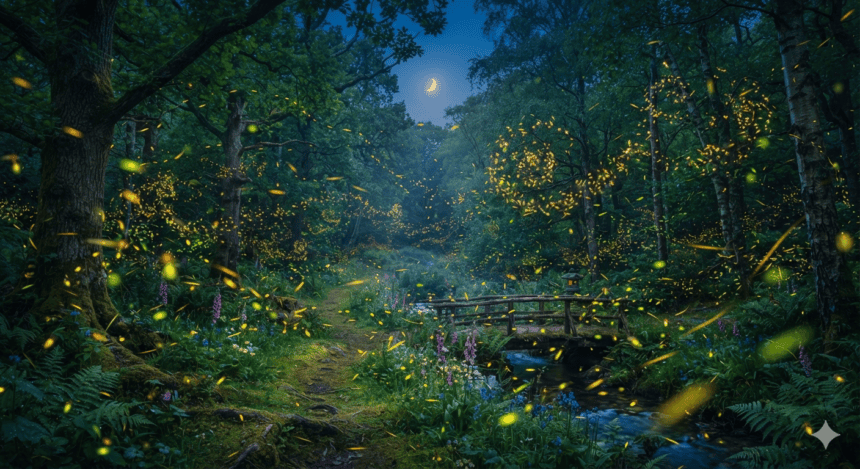
The firefly population is plummeting, and the lights that define summer evenings are flickering out across the globe.
A new study published in *Science of The Total Environment* confirms what many have suspected: light pollution and habitat loss are driving fireflies toward extinction. Researchers tracked 130 species across 40 countries, finding that artificial light at night—or ALAN—disrupts the complex, rhythmic flashing that fireflies rely on to find mates.
It’s not just about losing a nostalgic summer aesthetic. Fireflies serve as critical indicators of ecosystem health. They are sensitive to pesticides, soil moisture changes, and shifts in temperature. When they disappear, it signals a deeper collapse in the local food web, affecting everything from predatory beetles to the soil quality of the wetlands they inhabit.
“The glow is a language,” said Dr. Sara Lewis, a lead biologist who has tracked these insects for decades. “When we flood the night with LED glare, we are essentially shouting over their conversation. They can’t find each other, they don’t reproduce, and the next generation simply never arrives.”
The data is stark. In North America, the *Photinus pyralis*—the common “Big Dipper” firefly—is seeing localized population drops of up to 30% in suburban areas where street lighting has expanded. In parts of Southeast Asia, the destruction of mangrove forests to make room for palm oil plantations has decimated the colonies that once lit up entire riverbanks.
Local conservationists are now pushing for “dark sky” initiatives, urging municipalities to dim streetlights during peak mating seasons—typically late June through July. These aren’t just environmental measures; they are attempts to save a biological process that has occurred for millions of years.
The fix isn’t complicated, but it requires a shift in how we build our nights. Motion-sensor lights, amber-hued bulbs, and shielded fixtures that point downward can reduce the “light trespass” that confuses these insects.
Without these changes, the bioluminescent signal that has captivated humans for centuries will become a memory. We aren’t just losing a bug; we are losing the silent, rhythmic pulse of the wild.