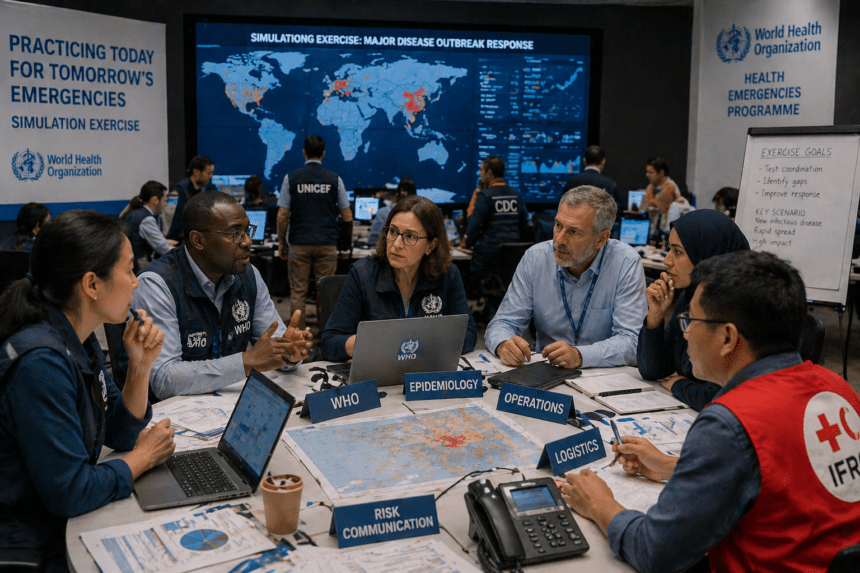
The World Health Organization (WHO) has brought together countries and international partners for a large-scale simulation exercise aimed at strengthening global readiness for future disease outbreaks.
The initiative, described as a “practice today for tomorrow’s emergencies” effort, involved health authorities, emergency responders, and partner organizations working through a mock scenario of a major infectious disease outbreak. The exercise tested coordination, decision-making, and response mechanisms at both national and international levels.
According to WHO officials, the simulation focused on early detection, information sharing, resource mobilization, and crisis communication, all of which are critical in managing real-world health emergencies.
Participants assessed how quickly countries could identify and report new cases, implement containment measures, and coordinate with global partners to limit the spread of disease. The exercise also highlighted the importance of cross-border collaboration and transparent data exchange.
WHO said the drill provided valuable insights into strengths and gaps in current preparedness systems, helping countries refine their emergency response plans and improve resilience against future health threats.
Public health experts note that such simulations have gained importance following lessons learned from recent global health crises, emphasizing the need for proactive planning rather than reactive responses.
The organization reiterated its commitment to supporting member states in building stronger health systems and ensuring the world is better equipped to respond swiftly and effectively to the next major outbreak.