Your stomach contains something that sounds dangerous: hydrochloric acid. Yet this highly acidic environment is essential for normal digestion and protection against many harmful microorganisms.
So why does your body produce such a powerful acid?
What Is Stomach Acid?
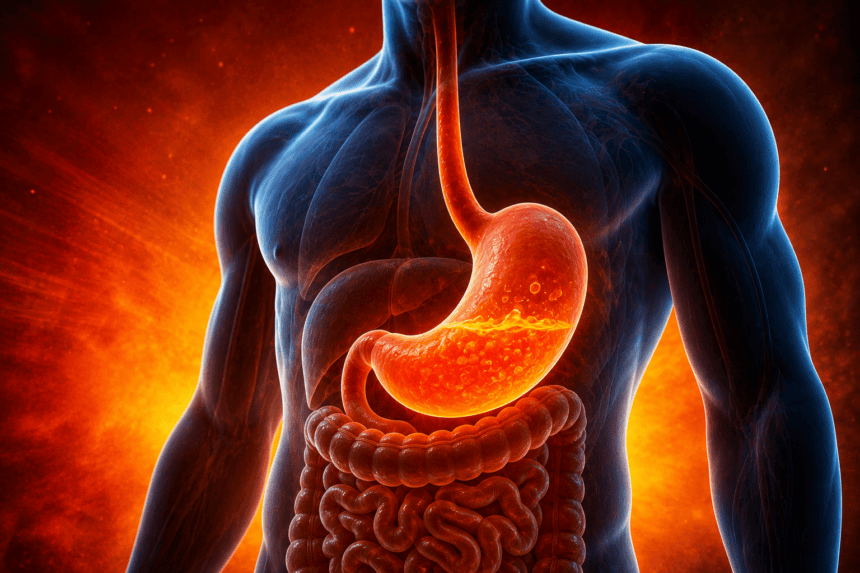
Stomach acid is mainly hydrochloric acid produced by specialized cells in the stomach lining called parietal cells.
The acid makes the stomach’s contents highly acidic, helping create the right environment for digestion.
Why Is Acid Necessary?
One of its major jobs is helping break down proteins.
Protein digestion begins in the stomach with the enzyme pepsin. Pepsin works best in an acidic environment. Stomach acid helps activate pepsin from its inactive form and creates the conditions needed for it to function.
The acid also helps break food into smaller components that can be processed further in the small intestine.
Does Stomach Acid Kill Germs?
It can.
The stomach’s acidic environment provides an important barrier against many microorganisms that enter the body through food and drinks.
It does not eliminate every pathogen, but it is an important part of the body’s defenses.
Why Doesn’t the Acid Burn Through Your Stomach?
This is one of the most interesting parts.
Your stomach is protected by a mucus-bicarbonate barrier. Specialized cells produce mucus that coats the stomach lining, while bicarbonate helps neutralize acid close to the surface of the cells.
The stomach lining also continually renews itself.
Together, these protective mechanisms help prevent the stomach’s own acid and digestive enzymes from damaging its tissues.
What Happens When Acid Moves Upward?
The stomach is designed to contain acid, but sometimes stomach contents can flow backward into the esophagus.
This can cause acid reflux and heartburn, producing a burning sensation in the chest or throat.
Unlike the stomach, the esophagus does not have the same level of protective lining against acid.
Occasional reflux is common, but frequent or severe symptoms should be evaluated by a healthcare professional.
Does More Acid Always Mean Better Digestion?
No.
The stomach needs an appropriate acidic environment, but excessive acid exposure in the wrong place can cause problems. The body carefully regulates acid production through hormones, nerves and local chemical signals.
The bottom line: Stomach acid is not simply something that causes heartburn. It is an essential digestive tool that helps break down proteins, activate digestive enzymes and defend against many microbes.