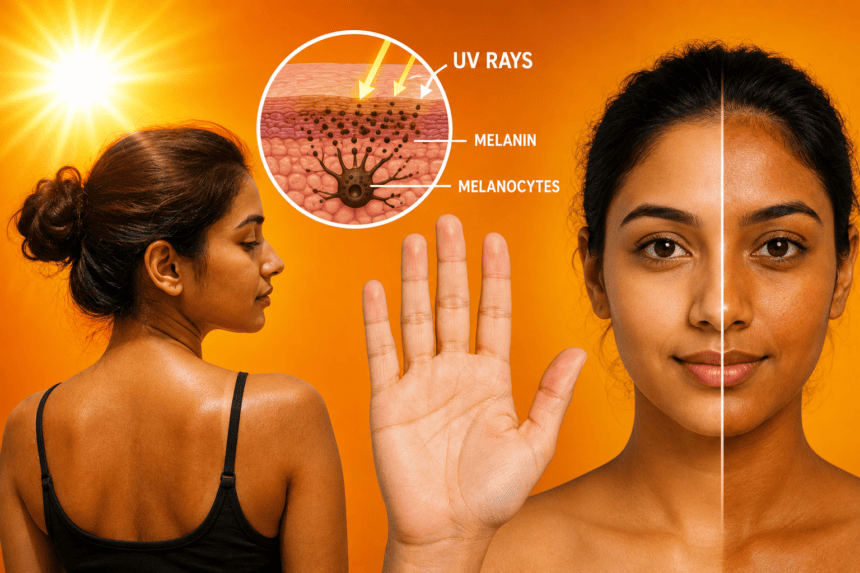
Spend time in the sun and you may notice your arms and face becoming darker, while the palms of your hands remain much lighter. This difference is not accidental. It comes from the structure and biology of the skin.
What Causes a Tan?
Sunlight contains ultraviolet (UV) radiation. When UV radiation reaches the skin, it can trigger melanocytes—specialized cells that produce melanin, the pigment responsible for much of our skin color.
Melanin helps absorb some UV radiation and provides a degree of natural protection to skin cells.
When the skin is exposed to UV radiation, increased melanin production can make exposed areas appear darker. This is what we commonly call tanning.
Why Are Palms Different?
The palms and soles have unusually thick skin compared with many other parts of the body. Their outer layer, called the stratum corneum, is thicker and specialized for handling friction and pressure.
Another important factor is the distribution and behavior of pigment-producing cells. The palms and soles generally have less visible pigmentation than many other areas of the skin.
As a result, they usually do not darken in the same way as sun-exposed areas such as the arms, face and shoulders.
Are Palms Completely Protected From UV?
No.
The lighter appearance of your palms does not mean they are immune to UV exposure. They can still experience damage from sunlight, particularly with significant exposure.
The backs of the hands are more likely to tan because they are more directly exposed to sunlight and have different skin characteristics.
Why Do Palms Sometimes Look Red or Dark?
Palms can change appearance for many reasons. Temperature, blood flow, pressure, irritation and certain skin conditions can affect their color.
A sudden or persistent change in the color of the palms—especially if accompanied by other symptoms—should be discussed with a healthcare professional.
Does a Tan Mean Healthy Skin?
Not necessarily.
A tan is a response to UV exposure, not proof of improved health. Repeated UV exposure can contribute to premature skin aging, sunspots and skin cancer risk.
Using shade, protective clothing and sunscreen can help reduce unnecessary UV exposure.
The bottom line: Your palms usually stay lighter because their skin is structurally different and has a different distribution of pigmentation. The same biology that makes them less likely to tan does not make them completely immune to sun damage.