Fiber is unusual. Your body needs it, but unlike many carbohydrates, much of it passes through the digestive system without being broken down by human digestive enzymes.
So if we cannot fully digest fiber, why is it so important?
What Is Dietary Fiber?
Dietary fiber is a group of carbohydrates found mainly in plant foods that the human digestive system cannot completely digest.
It is found in foods such as:
- Fruits
- Vegetables
- Beans and lentils
- Whole grains
- Nuts
- Seeds
Fiber is generally divided into soluble and insoluble types, although many foods contain a mixture of both.
Fiber Helps Your Digestive System
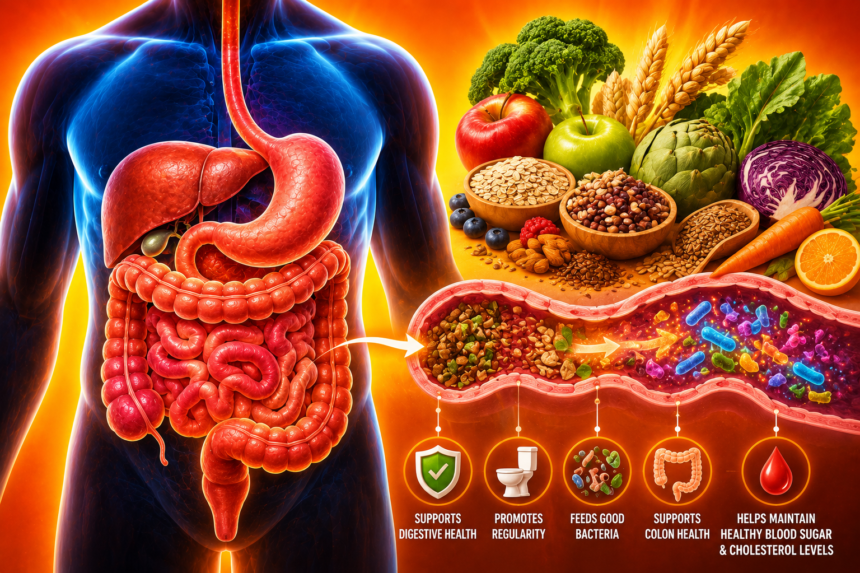
One of fiber’s most familiar benefits is supporting regular bowel movements.
Certain fibers absorb water and increase stool bulk, helping food move through the digestive tract more efficiently. This can help prevent constipation.
But fiber does much more than simply keep you regular.
Fiber Feeds Your Gut Microbes
Some types of fiber are fermented by bacteria living in the large intestine.
These beneficial microbes can use certain fibers as fuel and produce compounds called short-chain fatty acids, which play important roles in the gut environment.
This is one reason fiber is considered important for a healthy gut microbiome.
Fiber Can Help Control Blood Sugar
Fiber can slow the digestion and absorption of carbohydrates, particularly when it is part of a whole-food meal.
This can help reduce rapid increases in blood glucose after eating.
For people trying to manage blood sugar, foods naturally rich in fiber—such as vegetables, beans, whole grains and fruit—can be valuable parts of a balanced diet.
Fiber Can Help You Feel Full
High-fiber foods often require more chewing and can take longer to move through the digestive system.
Some forms of fiber also absorb water and expand, contributing to a feeling of fullness after eating.
This may make it easier for some people to manage their overall food intake.
Fiber and Heart Health
Diets rich in certain types of soluble fiber have been associated with improved cholesterol levels.
Foods such as oats, barley, beans and some fruits contain soluble fibers that can help reduce the absorption of cholesterol in the digestive tract.
How Much Fiber Do You Need?
Fiber needs vary according to age, sex and individual circumstances. Many people, however, do not consume enough.
A practical way to increase fiber is to gradually add more vegetables, fruits, legumes, whole grains, nuts and seeds to your diet.
Increase fiber gradually and drink enough fluids, because suddenly eating large amounts can cause gas, bloating or abdominal discomfort.
The bottom line: Fiber may escape digestion, but that is precisely why it is useful. It helps support bowel health, gut bacteria, blood-sugar control, fullness and overall metabolic health.