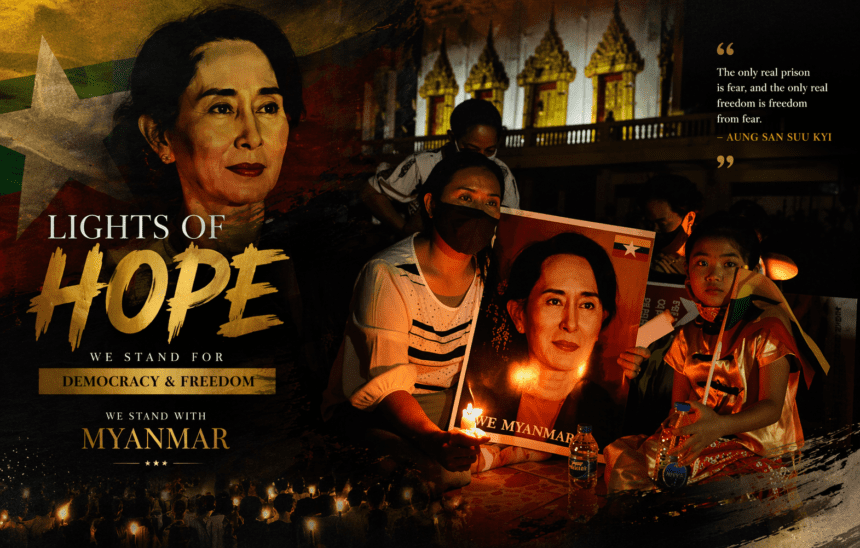
Myanmar’s military-led government used a traditional New Year amnesty on April 17, 2026 to project a softer image, but the move stopped well short of a real political opening. Former President Win Myint was released, while Aung San Suu Kyi’s prison term was reduced by about 4 years and 6 months rather than erased, leaving the country’s best-known civilian leader still in detention. State media said the amnesty covered more than 4,500 prisoners, though it remained unclear how many political detainees were actually included.
That distinction matters. The headline sounds dramatic, and for Win Myint it plainly is. But for Suu Kyi, this was only a partial concession. Reuters, cited in fresh reporting, said her sentence was cut from 27 years by roughly one-sixth, while AP reported that she remains imprisoned even as speculation continued about whether her detention conditions could eventually change. In other words, Myanmar’s generals trimmed the punishment, not the power they still hold over her fate.
The amnesty was announced by President Min Aung Hlaing, the junta chief who overthrew Suu Kyi’s elected government in the February 1, 2021 coup. Win Myint, a close Suu Kyi ally, had been detained since that takeover and was serving an eight-year sentence, reduced from an initial 12 years, before his release this week. The gesture therefore carries obvious symbolism: the military let one face of the old civilian order out, while keeping the other under lock and key.
Myanmar’s authorities presented the pardon as part of the country’s traditional New Year observances, which often bring mass prisoner releases. This time, though, the political context is impossible to ignore. The amnesty came just days after Min Aung Hlaing’s inauguration as president in a system critics say remains tightly controlled by the military, and rights groups have argued that such gestures are often designed to ease pressure abroad without changing the deeper machinery of repression at home.
The United Nations responded cautiously. According to AP, the U.N. said the releases were welcome but stressed that all political prisoners should be freed and that Myanmar still needs a genuine political process, not isolated acts of clemency. That guarded reaction says a lot. International observers do not see this as reconciliation. They see it as a limited move inside a system where repression is still the norm.
There is also the wider human cost hanging over the story. AP reported that since the 2021 coup, nearly 8,000 civilians have been killed and more than 22,000 political prisoners remain detained. Against numbers like that, the release of Win Myint and the reduction of Suu Kyi’s sentence look less like a turning point and more like a carefully measured political signal from a government trying to manage its image without surrendering control.