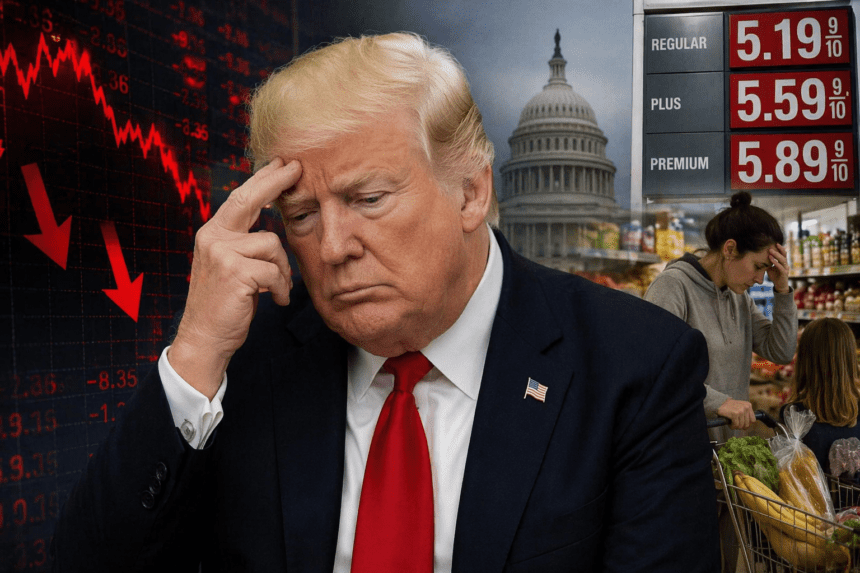
The war with Iran has highlighted what may be President Donald Trump’s most politically sensitive weak spot: the U.S. economy. Recent market swings have shown how closely investor confidence, fuel prices, and consumer sentiment are tied to events in the Gulf. When fears over the Strait of Hormuz intensified, oil prices surged and inflation concerns grew; when signs of easing appeared, stocks jumped and oil fell sharply.
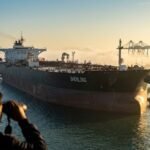
The central issue is energy. The Strait of Hormuz is one of the world’s most important oil chokepoints, and any threat to traffic there quickly feeds into global crude prices, shipping costs, and eventually gasoline prices for American consumers. That matters politically because Trump’s economic standing depends heavily on keeping inflation under control and avoiding another cost-of-living shock.
Economic analysts have warned that a prolonged Iran conflict could push inflation higher, complicate Federal Reserve decisions, and weaken household spending. Morgan Stanley said a longer conflict could lead to higher oil prices, hotter inflation, and greater market uncertainty, while Dallas Fed researchers modeled how the Iran war’s oil shock could lift U.S. inflation and inflation expectations.
That is why every signal from the region has moved markets so quickly. After the U.S. and Iran announced a temporary ceasefire on April 8, oil posted one of its sharpest drops in decades and stocks rallied. On April 17, fresh signs that the Strait of Hormuz was open again helped drive another strong market reaction, with U.S. indexes climbing and oil falling further. Those moves underlined how much economic relief now depends on keeping the conflict from disrupting energy flows again.
In political terms, this creates a pressure point for Trump. He can absorb some foreign-policy turbulence, but sustained rises in fuel prices, inflation, or financial-market stress would hit voters directly. That risk is especially serious in an election environment where cost-of-living concerns remain central. The broader lesson from the Iran war is that even limited military escalation can quickly become an economic problem at home.
So the article’s core argument is that the Iran war has not just tested Trump militarily or diplomatically. It has shown that his real pressure point is economic stability — because the faster oil, inflation, and markets react, the faster political pressure builds in Washington.