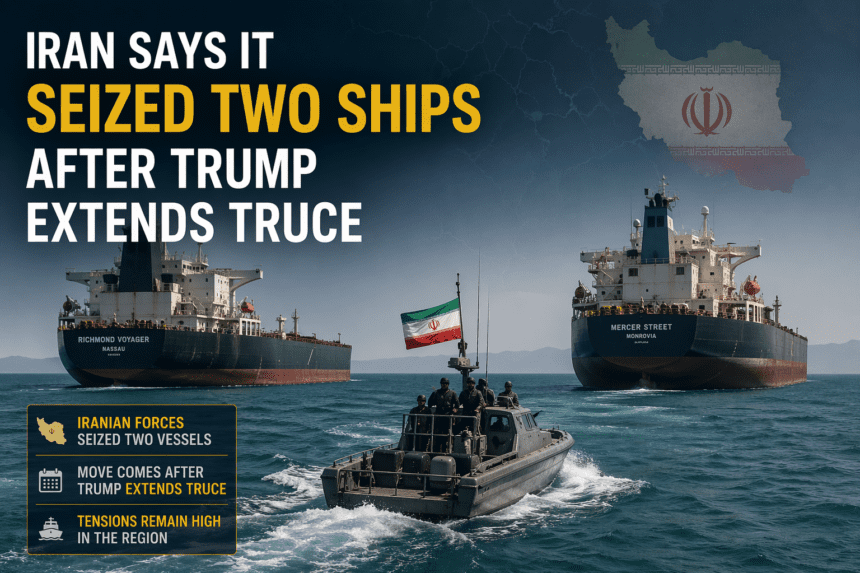
Iranian forces said Wednesday they had seized two commercial vessels in the Strait of Hormuz, a sharp new escalation that came only hours after President Donald Trump said he was extending the U.S. ceasefire with Iran indefinitely. Iranian and international media reports identified the ships as the MSC Francesca and Epaminondas, while separate live coverage said a third vessel was also attacked.
The timing is what makes this so striking. Trump’s announcement was supposed to buy space for diplomacy, not reopen the maritime front. But the truce extension did not remove the wider pressure campaign around Iran. Reports on Wednesday said the U.S. naval blockade and port restrictions were still in place, and Tehran was still refusing to commit to fresh talks, arguing Washington was sending mixed signals and negotiating in bad faith.
Iranian forces reportedly said the two ships had violated navigational rules, though the incident immediately raised fears of something bigger: that the Strait of Hormuz, briefly calmer under the ceasefire, could slide back into open confrontation. That matters far beyond the Gulf. The waterway is one of the world’s most important energy chokepoints, and even limited disruptions there can jolt shipping markets, insurance costs and oil prices almost overnight. Recent coverage said the renewed attacks had already rattled supply chains and pushed crude prices higher.
The broader diplomatic picture looks messy, honestly. Trump has framed the ceasefire extension as a chance for Iran to submit a unified proposal and keep negotiations alive. Iran, on the other hand, has signaled that talks cannot move forward while military and naval pressure remains in place. That gap is now becoming the whole story. The ceasefire may still exist on paper, but on the water, it is looking thin.
For now, there is still uncertainty around the full sequence of events, including the legal basis Iran is asserting for the seizures and the immediate status of the vessels and crews. What is clear, though, is that this was not a symbolic move. It was a reminder that even when leaders talk about de-escalation, the conflict can flare back up in the most sensitive corridor in the region and drag the global economy with it.