By using this site, you agree to the Privacy Policy and Terms of Use.
Accept
Media HydeMedia Hyde
  • Home
  • Politics
  • Education
  • Entertainment
  • Sports
  • Blogs
  • Business & Commerce
  • Others
    • Religious
    • Metropolitan
    • Climate and Weather
Font ResizerAa
Media HydeMedia Hyde
Font ResizerAa
  • Home
  • Politics
  • Education
  • Entertainment
  • Sports
  • Blogs
  • Business & Commerce
  • Others
    • Religious
    • Metropolitan
    • Climate and Weather
Follow US
© 2026 Media Hyde Network. All Rights Reserved.
international

Naqvi, US envoy discuss push for second round of US-Iran talks in Islamabad

Last updated: April 23, 2026 12:18 pm
Amna Iqbal
Share
SHARE

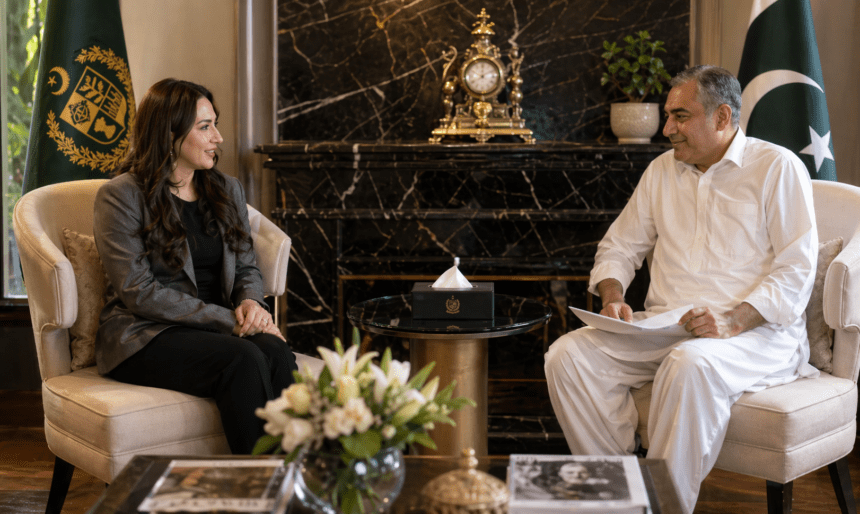
Pakistan’s diplomatic push to keep US-Iran dialogue alive gathered pace on Monday, as Interior Minister Mohsin Naqvi met US Chargé d’Affaires Natalie Baker in Islamabad to discuss efforts tied to a possible second round of talks between Washington and Tehran in the Pakistani capital. Officials said the conversation focused on the regional situation as well as security and logistical arrangements surrounding the expected negotiations.

The meeting came at a delicate moment. Pakistan has been trying to preserve momentum after hosting an earlier round of contacts in Islamabad this month, while also positioning itself as a go-between at a time when mistrust between the United States and Iran remains very much alive. Separate reports said Naqvi also held talks with Iran’s ambassador, Reza Amiri Moghaddam, where both sides stressed diplomacy as the only realistic path to easing tensions.

According to reporting from Pakistani and international outlets, Naqvi briefed Baker on security preparations for the proposed second phase of talks and expressed hope that the Islamabad track would move forward successfully. That sounds procedural on the surface, but it matters. In these situations, security planning is often the clearest signal that a host country believes negotiations still have a chance, even when the politics around them look shaky.

What makes this more than a routine diplomatic courtesy call is the wider uncertainty around whether the next round will happen on schedule, or at all. Al Jazeera reported that Iran had indicated it was not planning to send negotiators to Islamabad in the immediate term, casting doubt over Pakistan’s hopes for multi-day talks. At the same time, the Associated Press reported that President Donald Trump said the United States would extend its ceasefire with Iran at Pakistan’s request while awaiting a unified proposal from Tehran. Put plainly, the door isn’t shut, but it’s not fully open either.

Pakistan, for its part, appears determined not to let that door slam. In recent days, officials have repeatedly framed Islamabad as a venue for de-escalation rather than grandstanding, and Naqvi’s parallel contacts with both the American and Iranian sides fit that approach. The emphasis has been steady: security is in place, channels remain open, and diplomacy is still worth the effort.

There’s also a domestic angle here. Hosting even a fragile diplomatic process gives Islamabad a chance to underline its relevance at a tense regional moment, especially after earlier reports said Pakistan had already played a facilitating role in ceasefire diplomacy and in bringing the two sides to the table. That doesn’t mean a breakthrough is around the corner. Far from it. But it does suggest Pakistan wants to be seen not just as an observer of Middle East crises, but as a state willing to shoulder some of the risk that comes with mediation.

For now, the immediate takeaway from Naqvi’s meeting with Baker is fairly clear: Pakistan is still preparing as though a second round can happen, even as public signals from the broader US-Iran track remain mixed. Whether that preparation turns into actual talks in Islamabad will depend less on venue management and more on whether Washington and Tehran decide they’re ready to test diplomacy one more time.

Share This Article
Email Copy Link Print
Previous Article House Drops Planned Vote on Bill Seen as Weakening Endangered Species Act
Next Article Pope Leo Visits Bata Prison in Equatorial Guinea, Bringing a Message of Dignity and Quiet Pressure
Leave a Comment

Leave a Reply Cancel reply

Your email address will not be published. Required fields are marked *

Sponsored Ads

Stay Connected

FacebookLike
XFollow
InstagramFollow
YoutubeSubscribe
WhatsAppFollow
ThreadsFollow
PTI founder said to be unhappy with three senior leaders as internal strains sharpen
Politics
April 23, 2026
Laura Wolvaardt’s T20 masterclass: A 53-ball century that stunned the field
Sports
April 23, 2026
London’s skyline shrinks: Landmark-shaped bug hotels open near London Bridge
Climate and Weather
April 23, 2026
Gold Slips Amid Oil-Driven Inflation Concerns; Eyes on US-Iran Tensions
Business & Commerce
April 23, 2026
Rajpal Yadav’s Financial Ruin: How a Cheque Bounce Cost Him ₹22 Crore
Entertainment
April 23, 2026
New Zealand bowl first as Bangladesh bring back Tanvir and Mustafizur for ODI decider
Headline Sports
April 23, 2026

You Might Also Like

international

Bahrain Revokes Citizenships as Security Crackdown Continues

By
Ayan Ahmed
PARIS — French President Emmanuel Macron said Tuesday that France will help Lebanon prepare for negotiations with Israel, throwing Paris more directly behind a diplomatic push that both sides hope can keep a shaky ceasefire from collapsing. The pledge came after Macron met Lebanese Prime Minister Nawaf Salam in Paris on April 21, 2026, with both men calling for talks aimed at reinforcing the truce and easing pressure along the border. The message from Paris was fairly blunt: diplomacy has to move faster than events on the ground. Macron said securing the truce in Lebanon remains a priority, while Salam said Beirut is still committed to a political route — but only if Israel fully withdraws and Lebanese sovereignty is respected. That gives the talks a familiar tension from the outset: everybody says they want calm, but each side is attaching hard conditions to what comes next. What makes this moment different is that actual contact has already started. Earlier in April, Lebanon and Israel held their first direct diplomatic talks in decades in Washington, a notable step for two countries that remain formally at war. Those talks lasted more than two hours, according to AP, and were seen as an opening rather than any kind of breakthrough. Still, even getting both sides into the same room was a shift. A month ago, that would have sounded like a long shot. France is trying to carve out a role around that opening, even if it is not at the center of the U.S.-led channel. Reuters, in a report carried by AOL, said Macron offered French help in preparing Lebanese authorities for the negotiations despite Paris not being directly involved in the current track. That matters because France has longstanding ties to Lebanon and has already tried in recent months to position itself as a possible facilitator for Lebanon-Israel contacts. None of this is happening in calm conditions. The ceasefire itself is fragile, and that word keeps showing up for a reason. AP reported that Macron and Salam framed negotiations as a way to shore up that truce, not celebrate it. In other words, this is less about a peace moment and more about damage control — an attempt to stop cross-border violence from flaring back into a wider war. There is another layer here too: France’s own stake in Lebanon’s security picture has grown more personal and more political. AP reported that a French peacekeeper serving with the U.N. mission in southern Lebanon was recently killed, with France and UNIFIL blaming Hezbollah, which denied responsibility. Macron also signaled France could support a future peacekeeping arrangement if the current UNIFIL mandate expires later this year. That does not make France a neutral bystander. It makes Paris a country with skin in the game. For Lebanon, Salam’s visit was about more than symbolism. It was also about trying to strengthen Beirut’s hand before any deeper round of talks. That is how the Reuters report framed the meeting, and it fits the broader reality: Lebanon wants diplomatic backing, but it also wants guarantees that negotiations will not simply formalize Israeli military leverage on the ground. Israel, for its part, has shown little appetite for giving France a central seat. Recent reporting from The Times of Israel said Jerusalem has effectively boxed Paris out of the current Lebanon track, a sign that Macron’s activism is not automatically welcome everywhere. So France may end up playing the role of outside backer rather than direct broker, at least for now. That is still useful, but it is not the same thing as controlling the process. That leaves the region in an awkward, in-between place. The channels are open. The rhetoric is cautious. The fighting has eased, but nobody seems ready to pretend the danger is over. Macron’s offer to help Lebanon prepare for talks is significant because it tries to turn a brief diplomatic opening into something sturdier. Whether that works depends on what happens next — in Washington, along the border, and in the political calculations of Beirut and Jerusalem. Right now, the talks look less like a grand peace effort and more like a narrow bridge built over very thin ice.
international

Macron says France will help Lebanon get ready for talks with Israel

By
Mabruka Khan
WASHINGTON/ISLAMABAD: President Donald Trump said the ceasefire with Iran could remain in place until Tehran submits proposals and negotiations are wrapped up, though the latest reporting suggests the truce is still shaky and could unravel quickly if talks stall. AP reported Tuesday that the current two-week ceasefire was due to expire Wednesday, with U.S. and Iranian officials signaling possible new talks in Islamabad even as both sides warned they were ready to resume fighting without a deal. The line from Trump adds a bit of breathing room, at least on paper. CBS reported that he indicated the ceasefire would continue until discussions are concluded, but the same round of coverage also showed growing uncertainty over whether Iran would actually send a delegation for the next phase of talks in Pakistan. By Tuesday evening in Pakistan, officials were still waiting for formal confirmation from Tehran. That uncertainty has become the real story now. While Trump has publicly said senior U.S. officials, including Vice President JD Vance and envoy Steve Witkoff, are heading to Pakistan for another possible round of negotiations, Iranian officials have pushed back against the idea of negotiating under pressure. Recent reporting says Tehran has not officially confirmed participation, and Iranian public messaging has stressed that talks cannot proceed under threats or coercion. Pakistan, meanwhile, has emerged as the central mediator in this phase of the crisis. Multiple recent reports say Islamabad has been trying to keep the ceasefire alive and host a second round of U.S.-Iran talks, following earlier efforts that helped open a diplomatic channel after the fighting. That mediation role has given Pakistan unusual visibility in a conflict that has rattled the wider region and raised fears over shipping and energy security. Still, nobody seems to be pretending this is settled. AP described the talks as uncertain on the eve of the ceasefire deadline, while other live updates showed that the next meeting could be delayed or even collapse if Iran refuses to attend. That leaves Trump’s statement looking less like a firm peace breakthrough and more like a conditional extension: the guns stay quiet a little longer, but only if diplomacy starts moving. The main pressure point remains whether Tehran will put forward terms both sides can work with. Earlier reporting said Trump had treated an Iranian 10-point plan as a possible basis for negotiations, but key sticking points remain unresolved, including broader security demands and the terms of any longer-term settlement. So for now, the ceasefire is alive, yes, but it’s living hour to hour. That is why Trump’s latest remark matters. It signals he is willing to keep the pause in place a bit longer, yet it also makes clear that Washington wants something concrete from Tehran, not just more delay. Whether Iran responds with proposals, or with another refusal, will probably decide whether this fragile ceasefire becomes a negotiation track or slips back into open conflict.
international

Trump says Iran ceasefire can continue, but only until Tehran puts forward proposals

By
Mabruka Khan
international

In Gaza, First Local Vote in Years Offers Gauge of Hamas Popularity

By
Amna Iqbal
Media Hyde Media Hyde Dark
Facebook Twitter Youtube Rss Medium

About US

Media Hyde Network: Your instant connection to breaking stories and live updates. Stay informed with our real-time coverage across politics, tech, entertainment, and more. Your reliable source for 24/7 News.

Top Categories
  • Headline
  • Politics
  • Entertainment
  • Education
  • Sports
  • Religious
  • Metropolitan
  • Climate and Weather
Usefull Links
  • Contact Us
  • Disclaimer
  • Privacy Policy
  • Cookies Policy
  • Advertising Policy
  • Terms & Conditions

© 2025 Media Hyde Network. All Rights Reserved.

Welcome Back!

Sign in to your account

Username or Email Address
Password

Lost your password?