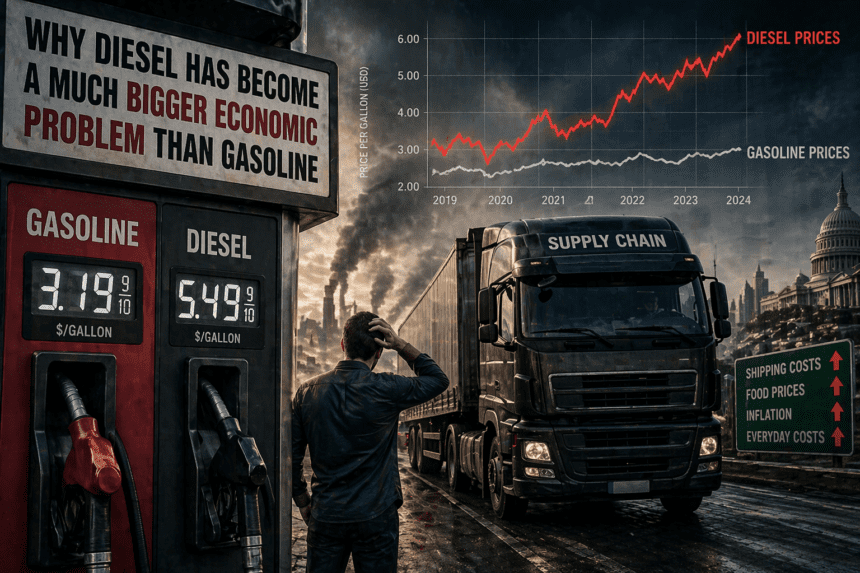
The price at the pump for gasoline grabs headlines, but the real economic damage is happening in the diesel aisle. While gasoline powers the daily commute, diesel is the lifeblood of the global supply chain, and it’s currently creating a structural inflation problem that the Federal Reserve and central banks struggle to contain.
When gasoline prices spike, household budgets tighten. When diesel prices climb, the cost of everything on a store shelf follows.
Diesel powers the heavy-duty trucks, freight trains, and cargo ships that move raw materials to factories and finished goods to retailers. It’s also the primary fuel for the agricultural sector, where tractors and combines run almost exclusively on the distillate. Unlike gasoline, which is largely a consumer-facing expense, diesel is a business-to-business cost.
Companies don’t absorb these surcharges. They pass them directly to the consumer. This isn’t just about the price of a gallon; it’s about the cost of shipping a pallet of flour, transporting a new refrigerator, or harvesting a field of corn.
The supply-demand mismatch is structural. Refineries have spent years pivoting toward lighter products like gasoline and jet fuel to meet shifting environmental mandates. This has left the production capacity for middle distillates diesel and heating oil—running thin. When global geopolitical shifts disrupt crude supply, the diesel market feels the shock first. It’s a leaner, more fragile supply chain than the gasoline market, leaving little room for error.
Global inventories remain stubbornly low. Even as the economy cools, industrial demand for freight remains tethered to a baseline that doesn’t fluctuate with consumer sentiment. If construction starts or manufacturing output dips, diesel demand stays largely flat because the goods already in the pipeline must still reach their destination.
This creates a persistent floor for inflation. While gasoline prices might retreat when demand softens, diesel often stays elevated due to the sheer necessity of the logistics industry.
Energy analysts often point to the “diesel crack spread”—the difference between the price of crude oil and the price of the refined product—as the true barometer of economic health. When that spread widens, it signals that the market is willing to pay a premium for the fuel that keeps the lights on and the shelves stocked.