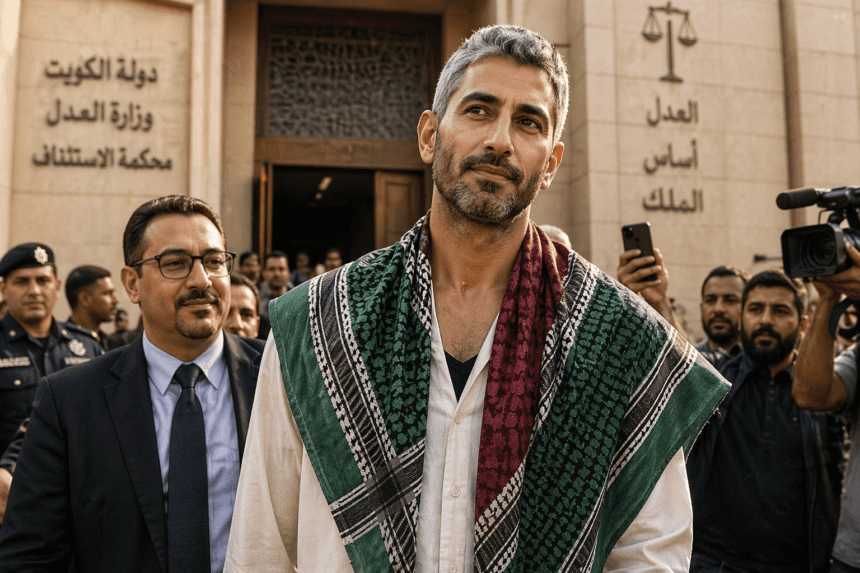
Kuwaiti-American journalist Ahmed Shihab-Eldin has been acquitted of all charges in Kuwait after spending 52 days in detention, in a case that drew sharp criticism from press-freedom groups and renewed concern over how Gulf states are policing wartime speech online. His lawyers and rights advocates said he is expected to be released following the court decision on Thursday, April 23.
Shihab-Eldin had been accused of spreading false information, harming national security, and misusing a mobile phone. The charges were tied to social media and Substack posts linked to the Iran war, including verified and publicly available footage showing wartime damage and the crash of a US fighter jet near a US base in Kuwait.
He was arrested on March 3 while visiting family in Kuwait and then disappeared from public view for weeks, prompting growing alarm among fellow journalists, lawyers and advocacy groups. The Committee to Protect Journalists said earlier this month that he had not been seen publicly or posted online since March 2, and described the accusations against him as vague and overly broad.
The acquittal was welcomed almost immediately by press-freedom organizations. It was relieved by the verdict and stressed that Shihab-Eldin’s safety and freedom remained the priority. That reaction mattered because the case had started to look bigger than one journalist’s legal trouble; to many observers, it had become a test of how far national-security language can be used to curb reporting and commentary during a regional conflict.
What made the case especially striking is that the material at the center of it was not described by advocates as classified or secretly obtained. Reports said the posts included content already circulating elsewhere, which critics argued undercut the logic of the prosecution. Even so, the detention fit a broader pattern seen during the Iran war, with Gulf governments taking a harder line on footage, commentary and information they considered sensitive to military affairs or public order.
Shihab-Eldin is a well-known journalist and presenter who has worked with outlets including Al Jazeera, VICE, HuffPost, the BBC and The New York Times, which helped push the case into international view. His detention drew attention not only because of his profile, but because it suggested that even established journalists could be vulnerable when conflict coverage collides with restrictive security laws.
For now, the court’s ruling closes the legal case in his favor. But it does not erase the broader warning the episode sent through the region’s media circles: in moments of war, the line between reporting and alleged offense can become dangerously thin.