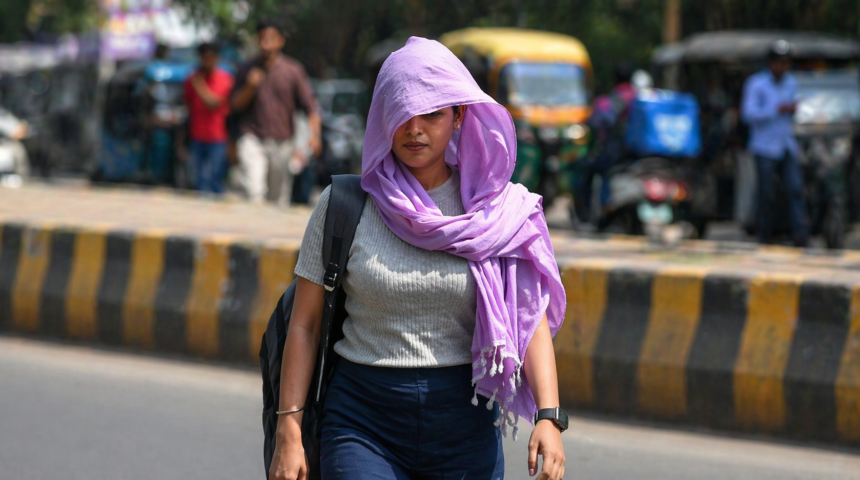
North India is sliding into another punishing stretch of summer weather, with temperatures already crossing 40 degrees Celsius in parts of the region and the India Meteorological Department warning that heatwave conditions are likely over the plains of northwest and central India during the next three to four days. IMD’s latest district-wise warning and all-India bulletin both point to a broad belt of hot conditions rather than a one-day spike.
The numbers are already uncomfortable. New Delhi was at 41C when the latest forecast snapshot was pulled, with highs forecast around 43C over the next few days, a reminder that the capital has entered the dangerous part of the pre-monsoon season earlier than many residents would like. Recent Indian media reporting has also said Delhi-NCR and neighboring states were expected to see temperatures in the 42C to 45C range as the heat intensifies.
Across the wider north and west, the pattern looks much the same. Fresh reporting from Gujarat said Rajkot reached 42.7C, while Ahmedabad climbed to 41.5C and other cities in the state also stayed above 40C. Though Gujarat is outside “North India” in the narrowest sense, the readings help show how wide the hot zone has become as April closes out.
What gives this story its force, though, is the human scene on the ground. Recent image coverage from India’s heat season has captured people walking under umbrellas near India Gate, children cooling off under tube wells in Punjab, and families crowding around water sprays and public taps to get through the afternoon. Those pictures say something the forecasts can’t: once the mercury climbs past 40C, daily life starts changing fast. Streets thin out. Outdoor work gets harder. Shade turns into a necessity, not a luxury.
The IMD has been warning for weeks that this would not be a mild season. Its April-to-June outlook said India is likely to see above-normal heatwave days and warmer nights in several regions, including northern parts of the country. Warm nights matter more than they sound. They reduce the body’s chance to recover, especially for the elderly, children, outdoor workers and people in dense urban neighborhoods where concrete holds the day’s heat.
There are hints of limited weather relief in some places, but not enough to change the broader picture yet. A few reports mention light showers and gusty winds in pockets of the country, tied to pre-monsoon activity, while the IMD’s core message remains that heatwave conditions are likely to persist across northwest and central plains in the near term.
For city residents, the strain is immediate. For workers, it’s worse. Construction laborers, delivery riders, street vendors and traffic police are usually the first to absorb the season’s harshest blows, and state authorities elsewhere in India have already begun issuing advisories that urge people to avoid peak afternoon exposure, drink more water and watch for heat stress symptoms. Those advisories may sound routine, but in a 40C-plus stretch they can be the line between discomfort and medical emergency.
So this is not just a weather story, and not only a visual one either. It is a story about how quickly extreme heat can reshape ordinary life across North India. The forecasts are blunt, the temperatures are already there, and the photographs are doing the rest of the reporting on their own.