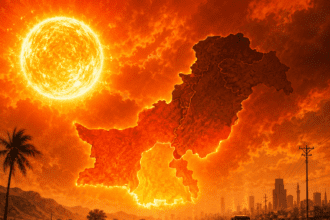
Sindh Chief Minister Murad Ali Shah has issued an urgent directive for citizens to minimize outdoor activity as a severe heatwave grips the province’s central and upper regions. The provincial disaster management authority confirmed temperatures in districts including Dadu, Larkana, and Jacobabad are expected to soar toward 48°C over the next 72 hours.
These regions, already prone to extreme summer spikes, are now on high alert. “We are monitoring the situation hour-by-hour,” the Chief Minister told officials during an emergency briefing held in Karachi on Tuesday.
He ordered local administrations to establish “heat stroke centers” at all rural health units and ensure that ambulances remain on standby in high-risk zones. The heatwave, driven by shifting wind patterns and high pressure, poses a direct threat to daily wage earners and those working in agricultural fields.
Health experts suggest the risk of heat exhaustion is significantly higher for those working between 11 a.m. and 4 p.m. — the window where heat indices are expected to peak. While the provincial government has directed the health department to stockpile IV fluids and cooling supplies, the primary instruction remains preventative. Authorities have advised residents to stay hydrated, keep indoor spaces ventilated, and avoid direct sun exposure unless absolutely necessary.
For the people of Sindh’s interior, this is a familiar, brutal cycle. However, meteorologists warn that this specific event carries an increased risk due to the duration of the high-pressure system, which shows few signs of breaking before the weekend.
The Chief Minister’s message is clear: the state is preparing, but the first line of defense is the public choosing to stay out of the sun. Any further delay in taking precautions, officials warned, could overwhelm local emergency rooms that are already bracing for a surge in heat-related admissions.