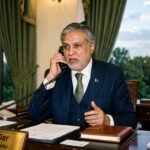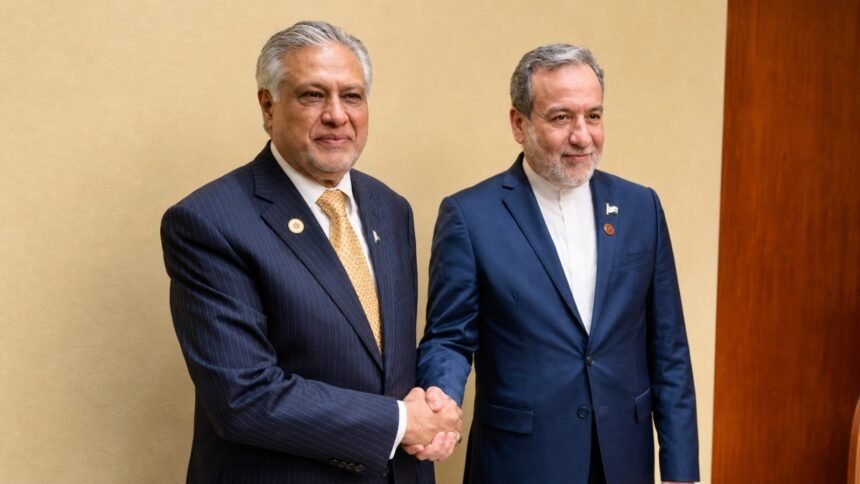
Pakistan’s Deputy Prime Minister and Foreign Minister Ishaq Dar held a fresh conversation with Iranian Foreign Minister Abbas Araghchi as Islamabad pushed to keep diplomatic channels open over a tense regional situation, with both sides focusing on ceasefire efforts, wider regional developments and what Pakistan described as ongoing diplomacy linked to U.S.-Iran engagement. Pakistani official media said the two men agreed on the importance of continued dialogue and staying in close contact.
The call, reported on April 24, came at a moment when Pakistan was trying to position itself as a go-between rather than a bystander. Radio Pakistan’s account said Dar and Araghchi exchanged views on the broader regional picture and on peace efforts already underway, while Pakistan’s Foreign Office messaging in recent months has repeatedly stressed that dialogue and diplomacy remain the only workable path forward.
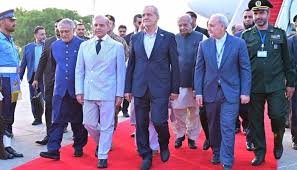
That phone contact was quickly followed by movement on the ground. Pakistan’s Foreign Ministry said Araghchi arrived in Islamabad the same day at the head of an Iranian delegation for meetings with Pakistan’s senior civilian and military leadership, with the visit explicitly framed around “latest regional developments” and “ongoing efforts for regional peace and stability.”
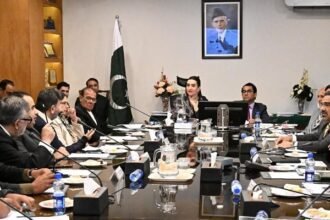
The message from Islamabad was pretty consistent throughout. Prime Minister Shehbaz Sharif, during a separate meeting with the Iranian foreign minister, underscored the need for dialogue and diplomacy for peace and stability in the region and beyond, according to state media. That gave the Dar-Araghchi contact a broader context: this was not a routine bilateral call so much as part of a coordinated Pakistani diplomatic push.
Iranian state media also cast the exchange in similar terms, saying the two foreign ministers discussed the latest regional developments and explored ways to address ongoing crises. IRNA further reported that Dar reaffirmed Pakistan’s determination to pursue regional peace efforts, a line that fits Islamabad’s recent public posture as it tries to balance ties with Tehran, Washington and Gulf capitals at the same time.
What makes the conversation more significant is the backdrop. International reporting in recent days has pointed to Pakistan’s role in relaying messages and facilitating contacts tied to the U.S.-Iran crisis, even as the wider confrontation has rattled energy markets and sharpened fears of a broader regional spillover. Pakistan has not publicly laid out every detail of that role, but official Pakistani statements have plainly linked Dar’s discussion with Araghchi to diplomacy “in the context of U.S.-Iran engagement.”
For Islamabad, the balancing act is delicate. Pakistan shares a border with Iran, has long argued for regional de-escalation, and has little appetite for another crisis on its western flank. So the Dar-Araghchi contact mattered not because it produced an immediate breakthrough, but because it signaled that both governments still see direct communication as necessary while the region stays on edge.
In practical terms, the takeaway is simple: Pakistan and Iran are keeping the line open, and Pakistan wants that fact noticed. Whether these contacts translate into something bigger will depend on how the wider U.S.-Iran track develops in the days ahead. For now, though, Islamabad is leaning hard on one argument — that however ugly the moment gets, diplomacy is still the only exit.