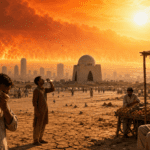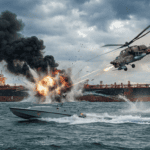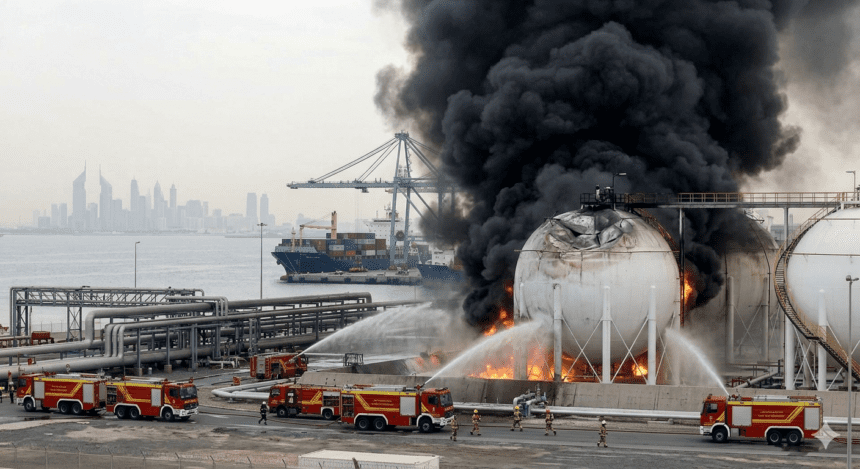
Explosions rocked key industrial sites in Oman and the United Arab Emirates early Tuesday, marking a sharp escalation in the shadow conflict between Tehran and its regional rivals. The coordinated strikes hit storage facilities and transit hubs, sending plumes of black smoke over ports that serve as critical lifelines for global oil shipments.
While no group has claimed responsibility, the precision of the attacks suggests the use of long-range drone technology consistent with arsenals linked to Iranian-backed proxies. The strikes come just hours after Tehran vowed “harsh retaliation” for recent covert operations targeting its nuclear facilities.
The economic fallout was immediate. Oil prices surged by 4% in pre-market trading as global markets braced for potential supply disruptions in the Strait of Hormuz. For the UAE and Oman, the attacks serve as a stark warning that the conflict is no longer confined to proxy battlegrounds in Yemen or Syria.
“This changes the calculus for the entire Gulf,” said regional security analyst Marcus Thorne. “We’ve moved past the phase of deniable skirmishes. These are direct hits on critical infrastructure, and the response will be measured in military posture, not just diplomatic statements.”
In Abu Dhabi, civil defense teams worked through the morning to contain fires at a logistics depot near Jebel Ali. Authorities have yet to release casualty figures, though local hospitals were placed on high alert shortly after the first explosion. Meanwhile, in Oman, the Port of Sohar—a vital gateway for regional trade—suspended operations indefinitely as military investigators combed the site for drone debris.
The White House issued a brief statement promising “unwavering support” for its Gulf partners but stopped short of detailing any specific military response. Across the region, the mood is one of quiet apprehension. Tehran has officially denied involvement, dismissing the reports as “fabrications of Western media,” yet regional capitals appear increasingly concerned about further escalation.
As the sun sets over the Gulf, the question for regional leaders is no longer whether another attack is coming, but how they can secure their borders before the next one hits.