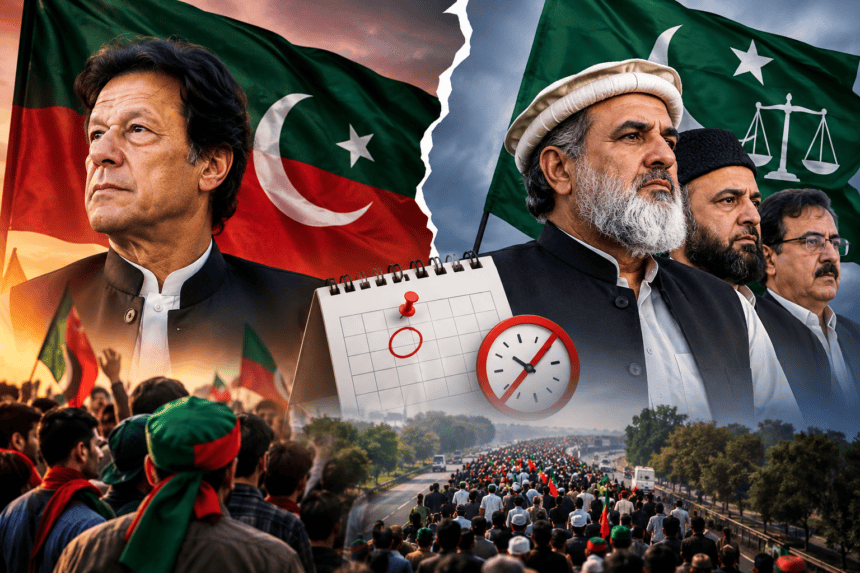
The alliance between Pakistan Tehreek-e-Insaf (PTI) and the Tehreek Tahafuz-e-Aain Pakistan (TTAP) is facing its first major internal crisis. The friction follows PTI’s abrupt decision to postpone its Islamabad long march and rally, a move that has left its coalition partners—and its own hardcore supporters—questioning the leadership’s resolve.
Mahmood Khan Achakzai, the veteran politician heading the TTAP, didn’t hide his frustration. Sources close to the alliance say Achakzai was “blindsided” by the postponement, learning about the delay through media reports and late-night messages rather than a formal consultative process. For an alliance built on the premise of “protecting the constitution,” the lack of internal democracy is a glaring irony.
The postponement wasn’t just a scheduling change; it was a tactical retreat that many in the opposition camp see as a sign of weakness.
Inside PTI, the divide is equally sharp. The “hawks” within the party—largely represented by the Khyber Pakhtunkhwa wing and the legal team—wanted to push through the barricades. They argue that every delay saps the momentum needed to secure Imran Khan’s release. On the other side, the “pragmatists” in the top tier claim they had to pull back to avoid a direct, bloody confrontation with the state machinery, citing “security concerns” and a lack of legal clearance.
“We aren’t here to play hide and seek with the administration,” one senior TTAP member said, requesting anonymity. “If the lead party decides to pack up and go home every time a container is placed on the road, the alliance loses its meaning.”
The fallout has been immediate. Achakzai has reportedly called for a meeting of the alliance’s steering committee to demand a clear roadmap. He wants a commitment that decisions of this magnitude won’t be made unilaterally by PTI’s “hidden” negotiators.
The optics are particularly bad for KP Chief Minister Ali Amin Gandapur. After weeks of fiery rhetoric promising to reach Islamabad at any cost, his sudden retreat has left his supporters in the northern districts feeling abandoned. The “U-turn” label, which has long followed PTI, is sticking once again.
The government, meanwhile, is capitalizing on the chaos. Information Ministry officials have been quick to frame the postponement as a “failed launch,” suggesting that PTI couldn’t gather the numbers it promised.
The alliance now faces a credibility test. If PTI cannot bridge the gap with Achakzai and the smaller parties in the TTAP, the opposition’s “grand movement” may fizzle out before it even reaches the capital.
The next few days are critical. Either the leadership provides a definitive new date and sticks to it—barricades or not—or they risk the total fragmentation of the only organized political front currently challenging the status quo.