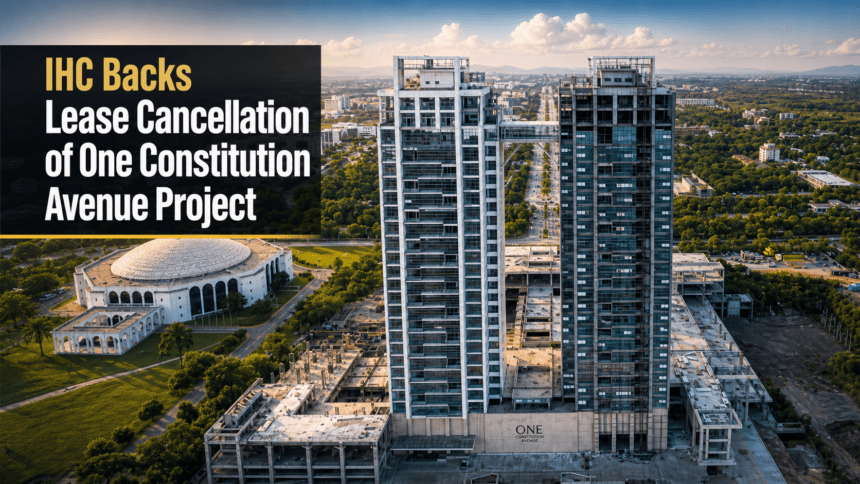
ISLAMABAD, May 4 — The Islamabad High Court has upheld the Capital Development Authority’s cancellation of the lease for the high-profile One Constitution Avenue project, closing the door on petitions filed by the developer and several occupants of the building in one of the capital’s longest-running property disputes.
In its detailed verdict issued on Monday, the court said the petitioners failed to show that the CDA had acted illegally when it terminated the lease. Reports on the ruling say the court also found that apartment buyers in the project do not hold ownership rights against the CDA, though they may seek financial recovery from the builder or developer through the appropriate legal forum.
The case has hovered over Islamabad’s real-estate and policy circles for years because of the project’s location in the Red Zone and the scale of the development itself. One Constitution Avenue, widely associated with the Grand Hyatt-linked site near Constitution Avenue, had become a symbol of how messy high-end urban projects can get when lease obligations, approvals and private sales collide. The court’s decision, at least for now, reinforces the CDA’s position that long-running payment defaults and related lease violations were serious enough to justify cancellation.
What makes the ruling especially significant is its effect on buyers. For many residents and investors, the legal fight was not just about a commercial lease on paper; it was about homes, savings and a sense of security tied to a luxury address. But the court’s reported view was blunt: whatever arrangements buyers made with the private builder did not create enforceable ownership rights against the land authority once the lease itself stood cancelled. That leaves many of them facing a hard, expensive next step — trying to recover money from the developer rather than asserting title to the apartments.
The ruling also triggered immediate administrative fallout. After the court upheld the cancellation last week, authorities moved to vacate the building, with reports describing a late-night operation involving the CDA and district administration. The move caused visible anxiety among residents and quickly pushed the dispute from court files into a public governance issue.
That, in turn, drew in the federal government. News reports say Prime Minister Shehbaz Sharif formed a high-level committee to review the matter and temporarily paused official action while the committee examines the legal and administrative dimensions of the dispute. So even with the court verdict now clearly on record, the policy response around the building may still evolve in the coming days.
For the CDA, the judgment is a major legal win. For buyers, it is something else entirely — a reminder that in Pakistan’s property market, the gap between what is sold and what is legally secure can be brutally wide. And for Islamabad, the case is likely to remain a cautionary tale about how prestige projects can unravel when regulatory compliance falls behind glossy marketing.