By using this site, you agree to the Privacy Policy and Terms of Use.
Accept
Media HydeMedia Hyde
  • Home
  • Politics
  • Education
  • Entertainment
  • Sports
  • Blogs
  • Business & Commerce
  • Others
    • Religious
    • Metropolitan
    • Climate and Weather
Font ResizerAa
Media HydeMedia Hyde
Font ResizerAa
  • Home
  • Politics
  • Education
  • Entertainment
  • Sports
  • Blogs
  • Business & Commerce
  • Others
    • Religious
    • Metropolitan
    • Climate and Weather
Follow US
© 2026 Media Hyde Network. All Rights Reserved.
BlogPolitics

China Tries to Keep Leverage With Trump and Iran as Conflict Keeps Shifting

Last updated: May 5, 2026 6:47 am
Abdul Saboor
Share
SHARE

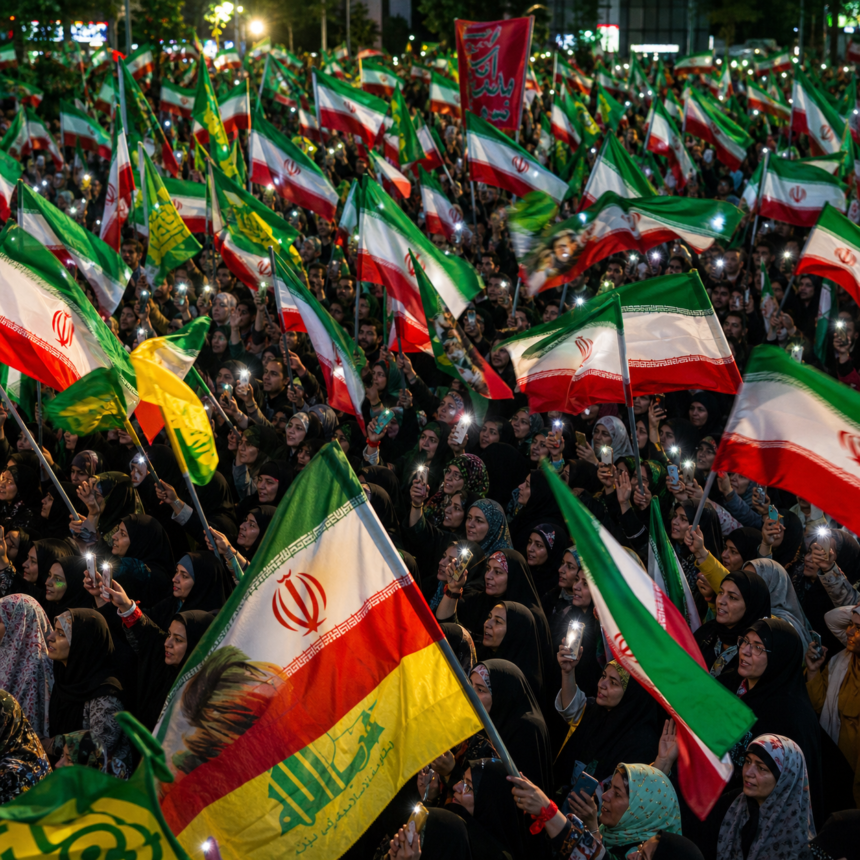
As the Iran war drags into a shaky new phase, China is trying to do something difficult, maybe impossible: stay close enough to Tehran to protect its long-term interests, while leaving itself room to deal with President Donald Trump’s White House on trade, sanctions and broader great-power rivalry. Beijing’s public stance has been steady — call for a ceasefire, oppose escalation, urge diplomacy — but underneath that language sits a harder calculation about oil, influence and strategic timing.

The immediate pressure point is energy. The Strait of Hormuz remains unstable, and the U.S. said this week it had moved to reopen shipping after renewed Iranian-linked attacks strained an already fragile ceasefire. That matters enormously for China, which depends heavily on imported energy and has long treated Gulf stability as an economic necessity, even while benefiting from discounted Iranian crude moving through murky commercial channels.

Washington, for its part, is pushing directly at that vulnerability. In statements issued on May 1, the U.S. State Department and Treasury said they were tightening sanctions on the Iran-China oil trade, including action aimed at a China-based terminal operator and warnings to Chinese independent refineries tied to Iranian crude imports. Treasury said China buys roughly 90 percent of Iran’s oil exports, much of it processed by “teapot” refineries in Shandong. That figure helps explain why Beijing can’t simply walk away from Tehran, even if the war has made the relationship more politically costly.

So China is playing both ends carefully. Publicly, Foreign Minister Wang Yi has framed Beijing’s position as “objective and impartial,” calling for an end to fighting and warning about wider regional spillover. Chinese officials have also highlighted mediation contacts involving regional players, including Pakistan, and maintained direct communication with Iran’s foreign minister. That lets Beijing present itself as a responsible diplomatic actor without committing to the sort of security role the United States still plays in the Gulf.

There’s another layer here, and it’s the one Chinese strategists are unlikely to say out loud. A U.S. administration pulled deeper into Middle East crisis management is, by definition, spending time, political capital and military attention away from East Asia. Even if Beijing does not want a wider war, prolonged instability can still create openings: higher dependence on Chinese diplomacy, more pressure on Washington’s alliance bandwidth, and another chance for Beijing to argue that the U.S. security model produces disorder rather than stability. That is an inference from the pattern of China’s messaging and the geopolitical context, not a formal Chinese admission.

Still, China’s room to maneuver is narrower than it looks. If Iran pushes too far in the Gulf, oil shocks and maritime risk hit China as well. If Trump escalates sanctions enforcement, Chinese firms and refiners face greater exposure. And if Beijing leans too openly toward Tehran, it risks giving Washington fresh ammunition at a moment when broader U.S.-China ties are already tense. In other words, China wants the advantage, not the chaos. That’s the balancing act.

For now, Beijing seems to believe it can live with ambiguity. It can condemn war, keep talking to Iran, criticize U.S. pressure, and quietly protect the commercial arteries that matter most to its economy. But wars have a way of shrinking diplomatic gray zones. If the Hormuz crisis worsens or sanctions bite harder, China may soon have to show whether it is really a neutral broker, a strategic partner of Iran, or simply a power trying to profit from everyone else’s emergency.


Share This Article
Email Copy Link Print
Previous Article Álvaro Olmos Torrico lines up new feature, Chicha Fantasy, after The Condor Daughter breakthrough
Next Article Pakistan open market forex rates: Dollar at Rs279.05 on May 5 Pakistan open market forex rates: Dollar at Rs279.05 on May 5
Leave a Comment

Leave a Reply Cancel reply

Your email address will not be published. Required fields are marked *

Sponsored Ads

Stay Connected

FacebookLike
XFollow
InstagramFollow
YoutubeSubscribe
WhatsAppFollow
ThreadsFollow
Sindh Schools to Close for Two-Month Summer Break Starting June 1
Education
May 13, 2026
Pakistan Targets Tech Workforce with 20,000 AI Training Slots
Education
May 13, 2026
Tokyo University Launches Fully Autonomous Lab Where Robots Run the Show The lights are on at the University of Tokyo’s newest chemistry lab, but the lab coats are gone. In a move that signals a shift for experimental science, the university has officially opened a facility where robots handle the entire research cycle—from mixing chemicals to analyzing results—without a single human in the room. This isn’t just a room with a few automated arms. It’s a closed-loop system designed to hunt for new materials for batteries and semiconductors at speeds that make traditional methods look like they’re standing still. The AI designs the experiment, the robots execute it, and the data feeds right back into the AI to decide what happens next. "The goal is to remove the bottleneck of human physical labor," a researcher involved in the project’s pilot phase said. "A human can do maybe ten experiments a day. This system won't stop at ten, and it doesn't need to go home at 5:00 PM." The stakes are high. Japan is currently locked in a global race to find more efficient materials for the next generation of electric vehicle batteries. By cutting humans out of the "pipette-and-wait" cycle, the university expects to compress years of trial-and-error into a few weeks of non-stop robotic iteration. It’s a response to a looming crisis, too. Japan’s shrinking workforce means there are fewer young scientists entering the field every year. Automating the grunt work isn't just about speed; it’s about survival in a country where human talent is becoming a scarce resource. Critics often worry that "robot-run" means "job-lost," but the university’s lead engineers argue the opposite. They say the move frees up researchers to actually think, rather than spending eight hours a day performing repetitive liquid handling. The robots don't get bored, they don't make clerical errors, and they don't suffer from "Friday afternoon" fatigue that can ruin a data set. The lab is currently focused on thin-film materials, but the team plans to scale the technology to other branches of chemistry soon. If it works, the image of the lone scientist hunched over a workbench might soon be a relic of the past. The lab is running right now. It’ll be running tomorrow morning. And it won't need a coffee break to get through the night.
Tokyo University Launches Fully Autonomous Lab Where Robots Run the Show
Education
May 13, 2026
Pakistan Offers New Higher Education Scholarships to Bangladeshi Students
Education
May 13, 2026
Private Schools Defy Punjab Government’s Revised Summer Vacation Schedule
Education
May 13, 2026
HEC Drops Paperwork: Fully Online Degree Attestation Goes Live Nationwide
Education
May 13, 2026

You Might Also Like

Politics

Nadra to Open Karachi’s Largest Mega Centre

By
Sana Mustafa
Politics

Pakistan warns of harsher response to any future ‘miscalculation’, Asif says in Marka-i-Haq message

By
Aqil Rahman
BreakingPolitics

Karachi Mayor Murtaza Wahab caught riding e-bike without helmet

By
Ayan Ahmed
Politics

Trump Threatens National Emergency in Washington, DC Amid ICE Dispute

By
Hamna Raees
Media Hyde Media Hyde Dark
Facebook Twitter Youtube Rss Medium

About US

Media Hyde Network: Your instant connection to breaking stories and live updates. Stay informed with our real-time coverage across politics, tech, entertainment, and more. Your reliable source for 24/7 News.

Top Categories
  • Headline
  • Politics
  • Entertainment
  • Education
  • Sports
  • Religious
  • Metropolitan
  • Climate and Weather
Usefull Links
  • Contact Us
  • Disclaimer
  • Privacy Policy
  • Cookies Policy
  • Advertising Policy
  • Terms & Conditions

© 2025 Media Hyde Network. All Rights Reserved.

Welcome Back!

Sign in to your account

Username or Email Address
Password

Lost your password?