As the Iran war drags into a shaky new phase, China is trying to do something difficult, maybe impossible: stay close enough to Tehran to protect its long-term interests, while leaving itself room to deal with President Donald Trump’s White House on trade, sanctions and broader great-power rivalry. Beijing’s public stance has been steady — call for a ceasefire, oppose escalation, urge diplomacy — but underneath that language sits a harder calculation about oil, influence and strategic timing.
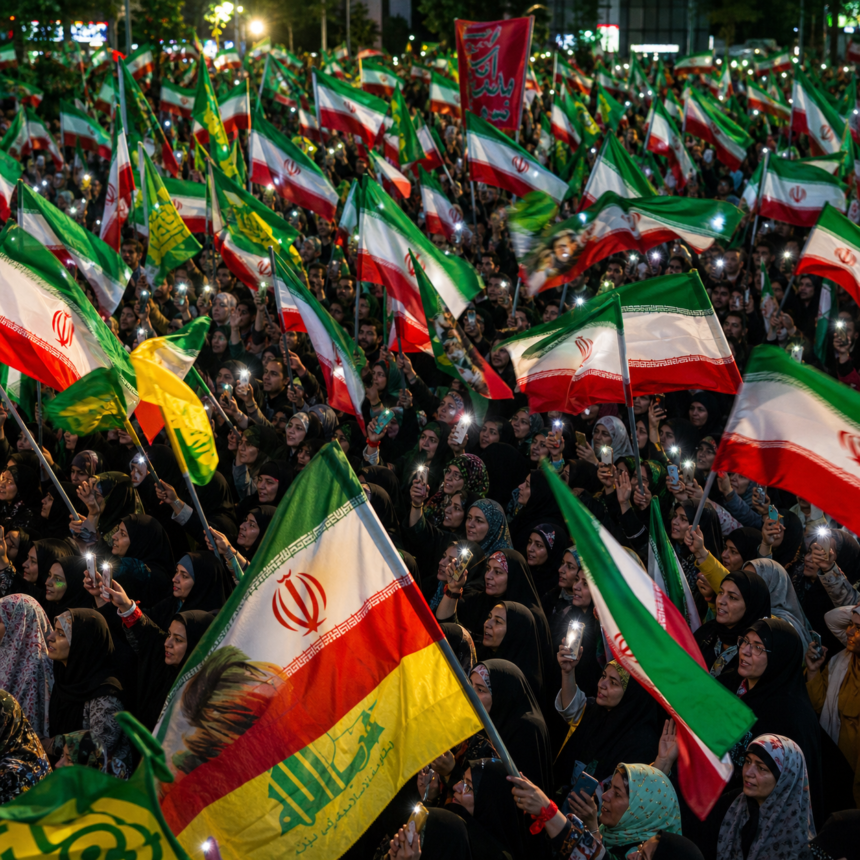
The immediate pressure point is energy. The Strait of Hormuz remains unstable, and the U.S. said this week it had moved to reopen shipping after renewed Iranian-linked attacks strained an already fragile ceasefire. That matters enormously for China, which depends heavily on imported energy and has long treated Gulf stability as an economic necessity, even while benefiting from discounted Iranian crude moving through murky commercial channels.
Washington, for its part, is pushing directly at that vulnerability. In statements issued on May 1, the U.S. State Department and Treasury said they were tightening sanctions on the Iran-China oil trade, including action aimed at a China-based terminal operator and warnings to Chinese independent refineries tied to Iranian crude imports. Treasury said China buys roughly 90 percent of Iran’s oil exports, much of it processed by “teapot” refineries in Shandong. That figure helps explain why Beijing can’t simply walk away from Tehran, even if the war has made the relationship more politically costly.
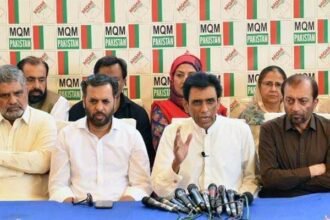
So China is playing both ends carefully. Publicly, Foreign Minister Wang Yi has framed Beijing’s position as “objective and impartial,” calling for an end to fighting and warning about wider regional spillover. Chinese officials have also highlighted mediation contacts involving regional players, including Pakistan, and maintained direct communication with Iran’s foreign minister. That lets Beijing present itself as a responsible diplomatic actor without committing to the sort of security role the United States still plays in the Gulf.
There’s another layer here, and it’s the one Chinese strategists are unlikely to say out loud. A U.S. administration pulled deeper into Middle East crisis management is, by definition, spending time, political capital and military attention away from East Asia. Even if Beijing does not want a wider war, prolonged instability can still create openings: higher dependence on Chinese diplomacy, more pressure on Washington’s alliance bandwidth, and another chance for Beijing to argue that the U.S. security model produces disorder rather than stability. That is an inference from the pattern of China’s messaging and the geopolitical context, not a formal Chinese admission.
Still, China’s room to maneuver is narrower than it looks. If Iran pushes too far in the Gulf, oil shocks and maritime risk hit China as well. If Trump escalates sanctions enforcement, Chinese firms and refiners face greater exposure. And if Beijing leans too openly toward Tehran, it risks giving Washington fresh ammunition at a moment when broader U.S.-China ties are already tense. In other words, China wants the advantage, not the chaos. That’s the balancing act.
For now, Beijing seems to believe it can live with ambiguity. It can condemn war, keep talking to Iran, criticize U.S. pressure, and quietly protect the commercial arteries that matter most to its economy. But wars have a way of shrinking diplomatic gray zones. If the Hormuz crisis worsens or sanctions bite harder, China may soon have to show whether it is really a neutral broker, a strategic partner of Iran, or simply a power trying to profit from everyone else’s emergency.