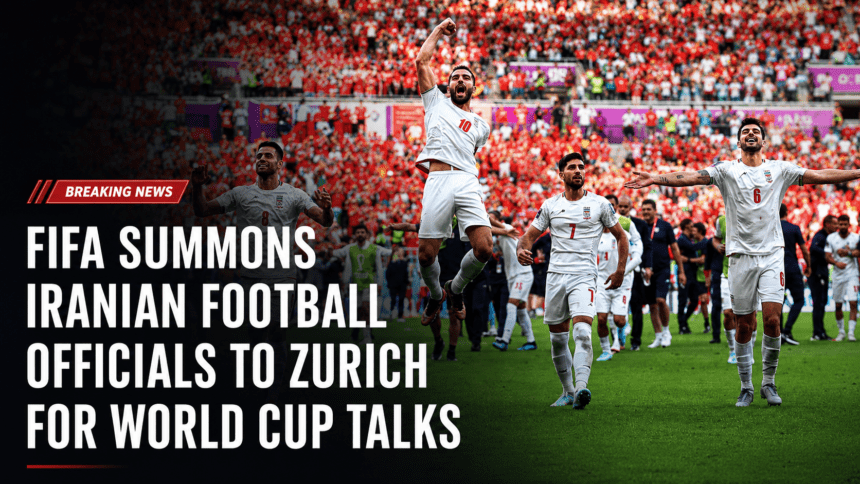
FIFA has called top officials from the Football Federation Islamic Republic of Iran (FFIRI) to its Zurich headquarters for urgent discussions regarding the country’s participation in upcoming international tournaments. The invitation comes as global pressure mounts over the treatment of female fans and athletes within the Iranian domestic league.
While FIFA officials haven’t explicitly linked the meeting to a potential suspension, the timing is impossible to ignore. The governing body has faced intense lobbying from human rights groups and former Iranian players to ban the nation from FIFA-sanctioned events, citing the systemic exclusion of women from stadiums and the crackdown on athletes who have supported recent civil protests.
“The meeting is a standard administrative review of football operations,” a spokesperson close to the matter said, though they declined to confirm if the agenda included a review of Iran’s adherence to FIFA’s statutes on non-discrimination.
For Iran, the stakes are high. A ban would effectively lock them out of the qualification cycles for the next World Cup, stripping the federation of vital funding and international standing.
The Iranian football federation has maintained that it operates independently of government interference—a claim that is frequently challenged by global observers. FIFA’s statutes strictly prohibit political intervention in national football associations, yet the intersection of state policy and the sport in Iran has been a point of friction for years.
This isn’t the first time Tehran has been summoned to Zurich. Previous meetings resulted in limited, often temporary, concessions regarding stadium access for women. Critics argue these measures were performative, failing to address the underlying restrictions that continue to define the Iranian sports landscape.
FIFA President Gianni Infantino is expected to lead the talks. He faces a delicate balancing act: maintaining the organization’s public stance on human rights while managing the political fallout of excluding a high-profile national team from global play.
Whether this meeting leads to a policy shift or serves as a final warning remains unclear. What is certain is that the clock is ticking for the FFIRI to prove that football in Iran is, in practice, open to everyone.