Pakistan’s electricity consumers could be in line for another round of relief after the Central Power Purchasing Agency-Guaranteed (CPPA-G) moved the National Electric Power Regulatory Authority (Nepra) for a negative quarterly tariff adjustment for the April-June 2025 quarter, the fourth quarter of FY2024-25. Reports on the filing say the proposed adjustment would translate into a cut of roughly Rs1.75 to Rs1.80 per unit in consumer bills, with the relief expected to run for three months if approved.
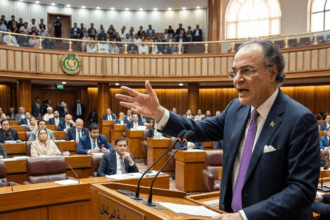
The proposed reduction matters because it comes at a time when households and businesses are still struggling with high electricity costs, unpredictable billing and summer demand pressure. The public hearing on the petition has already been held, and Nepra indicated during proceedings that a negative adjustment was likely, though the final notified figure would depend on scrutiny of the underlying numbers submitted by power companies.
Most coverage of the case puts the size of the consumer relief at a little over Rs53 billion, though some headlines have cited a higher number. The more consistently reported figure is about Rs53.393 billion, tied to the quarterly adjustment for the quarter ending June 2025. That difference is important, because in Pakistan’s power sector even a small shift in assumptions — sales volumes, recovery estimates, or charge treatment — can change the headline value of relief by billions of rupees.
At the heart of the adjustment is the same mechanism consumers have become painfully familiar with: quarterly tariff revisions that pass through changes in capacity charges and other power-purchase costs. In this case, lower underlying costs appear to have created space for a negative adjustment, meaning money would effectively flow back to consumers through reduced bills rather than an added surcharge. Business Recorder reported that Nepra also questioned some of the distribution companies’ figures during the hearing and ordered further inquiry, a sign that the regulator is not simply rubber-stamping the request.
If the regulator issues the reduction broadly in line with the petition, the cut would replace the earlier quarterly adjustment already being recovered from consumers. That is where the relief becomes more visible on monthly bills: not as a dramatic restructuring of the base tariff, but as a temporary easing in the adjustment component. For families already stretched by inflation, even a reduction of under two rupees per unit can make a noticeable difference over the high-consumption summer months.
The development also fits into a wider pattern. Earlier quarterly and monthly adjustments had already produced some short-term relief for different classes of consumers, as regulators and the government tried to soften the pressure from elevated power costs. Still, the deeper structural problems — expensive capacity payments, line losses, weak recovery and the drag of circular debt — remain far from solved. That means consumers may get a breather, but not necessarily a lasting fix.
For now, the immediate question is simple: whether Nepra’s final order keeps the relief near the Rs1.75-per-unit mark or nudges it higher, as some hearing coverage suggested. Either way, the case has revived hopes that electricity bills, at least for a few months, may come down instead of climbing again