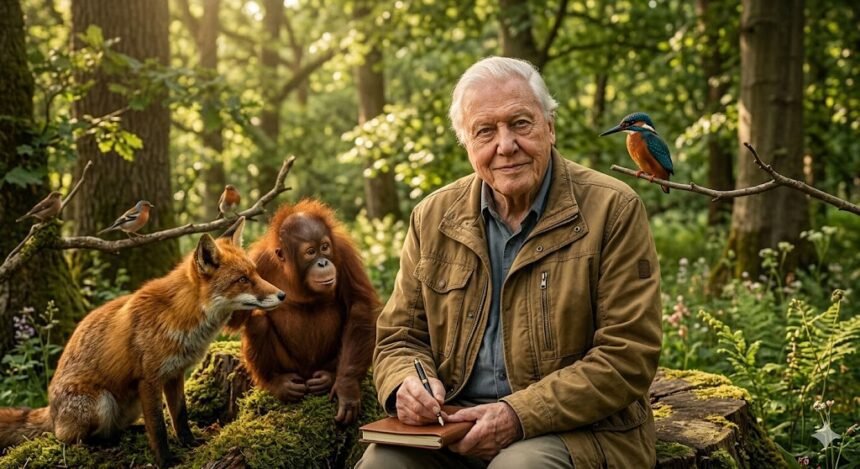
LONDON — Sir David Attenborough turns 98 today. While the milestone is a reminder of his longevity, it’s his enduring influence on global environmental policy that defines his career, not just the decades he’s spent behind a microphone.
He isn’t just a broadcaster anymore. He’s become the primary witness for the planet.
Attenborough’s shift from traditional nature documentary maker to climate activist has been deliberate. In recent years, he has moved away from the “pristine wilderness” narrative that characterized his early work at the BBC. Instead, he’s prioritized the harsh realities of habitat loss and the sixth mass extinction.
He didn’t just document the natural world; he forced it into the living rooms of the skeptical.
The strategy worked. His 2017 series, *Blue Planet II*, is widely credited with triggering a global legislative shift against single-use plastics. It wasn’t a policy paper that turned the tide; it was the visceral image of an albatross feeding its chick plastic waste. Politicians noticed because voters did.
“The natural world is the greatest source of excitement, the greatest source of visual beauty, the greatest source of intellectual interest,” Attenborough told a UN summit in 2020. “It is the greatest source of so much in life that makes life worth living.”
His influence today is felt most acutely in the corridors of power. When he speaks at COP summits, world leaders listen—or at least pretend to. His ability to distill complex atmospheric data into plain, urgent English has made him the most effective communicator the environmental movement has ever seen.
Critics occasionally argue that his focus on individual responsibility ignores the massive role of corporate emissions. Yet, he has consistently pivoted to address the systemic issues, pushing for a “rewilding” of the planet and a total transition to renewable energy.
He remains a fixture of British cultural life, yet his reach is distinctly global. He has narrated more natural history programs than any other person in history, ensuring that millions of people who will never see the Amazon or the deep ocean feel a proprietary stake in their survival.
At 98, he isn’t retiring. He’s currently working on new projects, continuing a pace that would exhaust people half his age.
He has spent nearly a century documenting the world. Now, his focus is entirely on ensuring there is a world left to document.