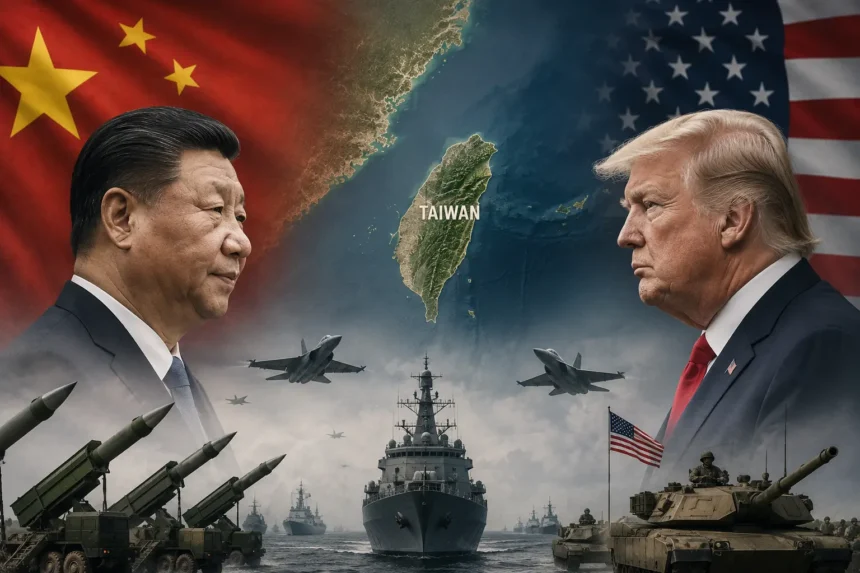
President Xi Jinping delivered a blunt assessment to the Biden administration this week, labeling the status of U.S.-China relations as “dangerous” and placing the blame squarely on Washington’s posture toward Taiwan.
The warning, delivered during high-level diplomatic exchanges, signals a hardening of Beijing’s position. Xi’s rhetoric suggests that the delicate balance between the two superpowers is eroding, with the self-governing island of Taiwan serving as the primary friction point. For Beijing, the issue is non-negotiable; for Washington, it remains a test of commitment to Indo-Pacific stability.
The stakes are high. Any miscalculation in the Taiwan Strait risks more than just diplomatic friction; it threatens a direct military collision that would shatter the global economy. Supply chains for advanced semiconductors—the lifeblood of modern tech—run directly through this geography. A conflict here wouldn’t just be a regional crisis; it would be a global catastrophe.
U.S. officials maintain that their policy remains unchanged, citing a commitment to the “One China” framework while simultaneously arming Taipei to ensure it can defend itself. To Beijing, this is a distinction without a difference. Chinese leadership views U.S. arms sales and high-level diplomatic visits to Taipei as a direct violation of sovereignty and an encouragement of independence movements.
Xi’s message serves as a reset of expectations. He is signaling that the era of managed competition is fraying. By framing the relationship as “dangerous,” he is shifting the burden of de-escalation onto the White House, essentially telling the U.S. that the next move—and the responsibility for any resulting fallout—lies in Washington.
The Biden administration now faces a narrowing corridor. If they pull back, they risk appearing weak to allies in the Pacific, such as Japan and the Philippines. If they continue their current trajectory, they face the rising risk of the very confrontation Xi is warning about.
There is no cooling-off period in sight. As both nations continue to build up their military presence in the region, the diplomatic language is becoming as volatile as the hardware moving through the Strait. The question is no longer whether ties can be improved, but whether they can be kept from snapping entirely.