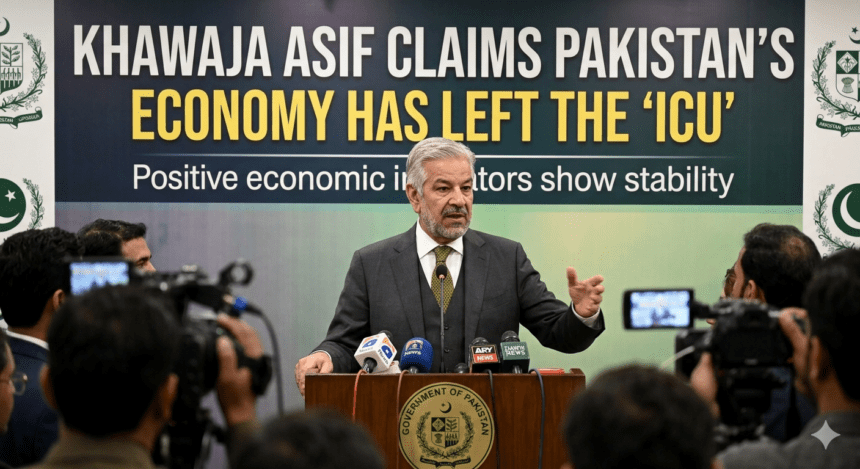
Defense Minister Khawaja Asif declared this week that Pakistan’s economy has finally moved out of the “intensive care unit,” signaling a shift toward stability after months of fiscal volatility. The assertion, made during a televised interview, attempts to project confidence in the government’s current economic trajectory.
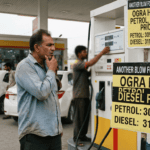
Yet, the recovery remains fragile. While the minister points to stabilizing foreign exchange reserves and a narrowing current account deficit, the average citizen faces a different reality. Inflation remains stubbornly high, and the cost of electricity and fuel continues to squeeze household budgets.
The government’s optimism rests largely on the recent staff-level agreement with the International Monetary Fund (IMF). Officials argue that the worst of the default risk has passed, allowing the administration to pivot toward structural reforms. However, these reforms—often involving increased taxation and the withdrawal of subsidies—have historically triggered public backlash.
Economists are less convinced by the medical analogy. While the immediate threat of a sovereign default has receded, critics argue the economy is merely in a state of “chronic stagnation” rather than a healthy recovery. Debt servicing continues to consume a massive portion of the federal budget, leaving little room for the development spending needed to spark genuine growth.
Asif’s rhetoric is a clear attempt to boost investor confidence. By framing the economic crisis as a resolved emergency, he hopes to encourage foreign direct investment—an area where Pakistan has struggled for years. But investors often look at long-term policy consistency rather than political soundbites.
The government’s challenge now is bridging the gap between macroeconomic data and the street-level experience. A decline in the inflation rate, while statistically significant, does not equate to lower prices for the consumer.
Until the cost of doing business drops and the purchasing power of the middle class stabilizes, the minister’s claim that the patient has left the ICU may ring hollow to those still struggling to pay their monthly bills.