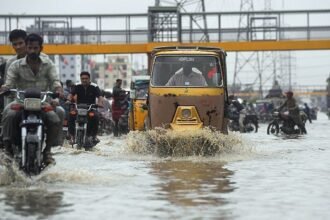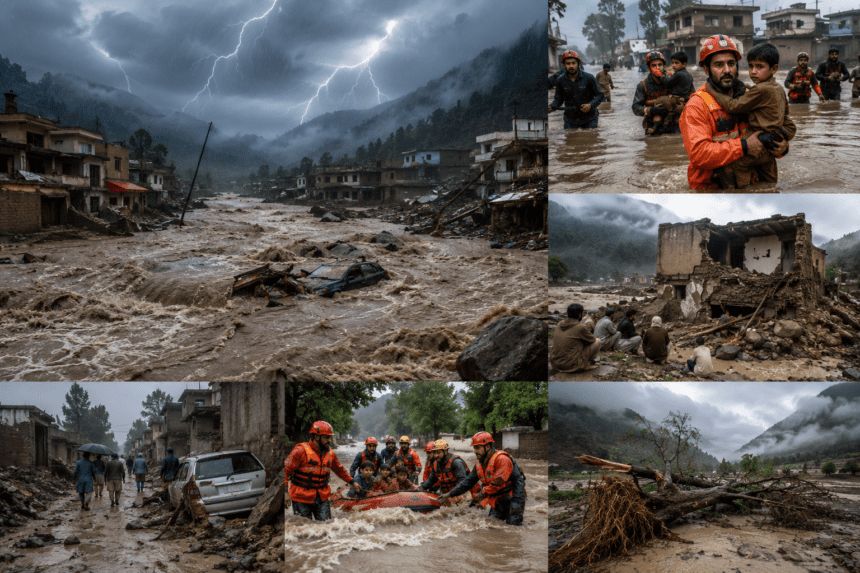
Flash floods and structural collapses triggered by relentless downpours have left at least nine people dead across Khyber Pakhtunkhwa. The Provincial Disaster Management Authority (PDMA) confirmed the toll late Tuesday, warning that the death count could rise as rescue teams reach isolated districts.
The victims, including children, died primarily when roofs gave way under the weight of torrential rain. Most of the destruction centered on the northern districts, where mountainous terrain makes both habitation and emergency access precarious.
The PDMA report indicates at least seven others sustained injuries in various incidents, ranging from wall collapses to being swept away by swollen nullahs. Local hospitals in Chitral and Swat are on high alert, struggling to manage the influx of patients arriving from rain-hit villages.
“We are dealing with a crisis on multiple fronts,” a PDMA spokesperson said. “The priority remains clearing blocked roads to allow ambulances and relief supplies to reach the most vulnerable areas.”
Infrastructure across the province has taken a direct hit. Dozens of houses are reported partially or fully destroyed, leaving families displaced in the middle of a severe weather cycle. Power outages persist in at least eight districts, as fallen trees and landslides have severed transmission lines, complicating relief efforts.
Meteorologists attribute the severity of this system to a persistent westerly wave interacting with local moisture levels. While the intensity is expected to taper off by Thursday, the threat of landslides remains high in the northern belt.
For the residents of these regions, the weather isn’t just a seasonal inconvenience—it’s a recurring threat to life and livelihood. With the soil already saturated from previous weeks of rain, the local administration is bracing for further structural failures.
Rescue operations continue, but until the skies clear, the province remains in a state of emergency.