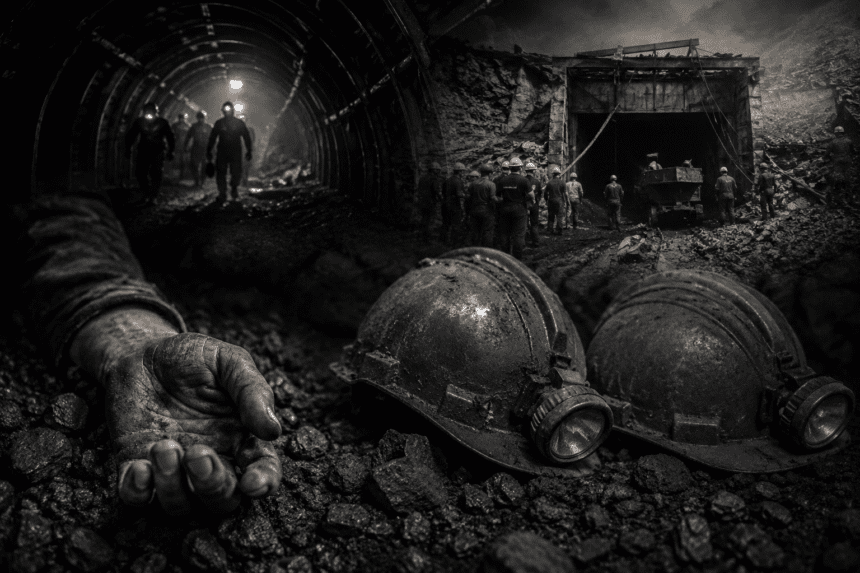
Two miners died early Tuesday morning when a section of a coal mine collapsed in the Lakhra area of Jamshoro, Sindh. Rescue teams recovered the bodies after an hour-long operation, confirming both men were trapped beneath the rubble following a roof failure deep underground.
The victims, identified as local laborers, were working in a private mine when the structural integrity of the tunnel gave way. While official reports on the exact cause remain pending, local mining unions have long cited the lack of basic safety equipment and poor ventilation as the primary drivers of such accidents in the region.
Rescue efforts were hampered by the remote location and the unstable nature of the mine’s shaft. By the time the bodies were pulled from the debris, it was clear that the structural collapse had left no margin for survival.
Mining in the Lakhra coalfield—a major energy hub—has faced persistent criticism over safety standards. Despite government regulations, many private operators continue to bypass mandatory inspections and safety protocols. For families of the deceased, the tragedy is a recurring nightmare; labor advocates argue that without strict enforcement of safety laws, these incidents will remain an inevitable part of the local industry.
Local authorities have launched an investigation into the mine’s management to determine if safety violations contributed to the collapse. The bodies were transported to a nearby hospital for autopsies before being handed over to their families.
As the investigation begins, the incident leaves behind a familiar question for the provincial labor department: how many more lives must be lost before the safety of the mines is finally treated as a priority rather than an afterthought?