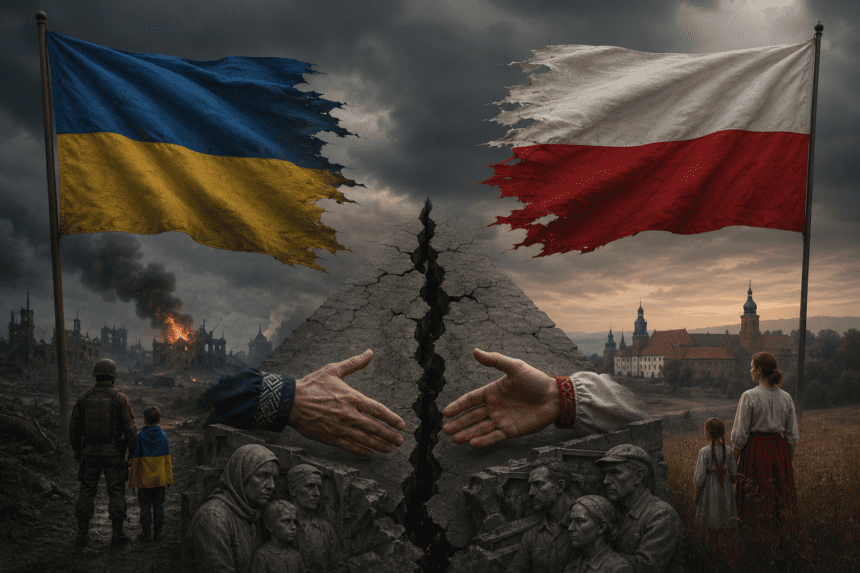
The long-standing historical shadow of the 1943 Volhynia Massacre is once again fracturing the Polish-Ukrainian alliance. While Warsaw has been a primary military and logistical backer for Kyiv since the Russian invasion in 2022, the ghosts of the Second World War are complicating diplomatic progress.
At the heart of the friction is the exhumation of victims from the massacres carried out by the Ukrainian Insurgent Army (UPA). Poland has pushed for years to allow excavations and proper burials of the estimated 100,000 Poles killed by Ukrainian nationalists. Kyiv, wary of the political optics during an existential war, has maintained a moratorium on these efforts, citing the need for monuments to be restored first.
The tension reached a breaking point this week as Polish officials openly linked the resolution of these historical grievances to Ukraine’s future membership in the European Union. Polish Deputy Defense Minister Pawel Zalewski recently suggested that the path to Brussels runs through the cemetery, signaling that Poland’s support is no longer a blank check.
For the Ukrainian government, the optics are delicate. President Volodymyr Zelenskyy faces pressure to maintain nationalist sentiment as a pillar of wartime morale. Acknowledging the atrocities of the UPA—which some in Ukraine view as freedom fighters against Soviet occupation—risks alienating domestic supporters at a time when national unity is the only thing keeping the front lines intact.
Analysts note that the dispute is becoming a weapon for external actors. Russian propaganda outlets frequently highlight these historical scars to drive a wedge between the two neighbors. By keeping the wound fresh, Moscow hopes to isolate Ukraine from its most vocal advocate in the EU.
“We are not talking about a minor diplomatic spat, but a fundamental clash over national memory,” says Dr. Marek Kowalski, a Central European security analyst. “Poland feels it has earned the right to demand closure, while Ukraine feels it is being held hostage by its history while fighting for its survival.”
Despite the rhetoric, neither side can afford a total collapse of relations. Poland remains the primary hub for Western weapons flowing into Ukraine, and Kyiv depends on Polish transit for its grain exports.
The standoff persists with no immediate compromise in sight. As both nations balance the weight of 1943 against the reality of 2024, the alliance is proving that while shared enemies can forge partnerships, shared history can just as easily tear them apart.