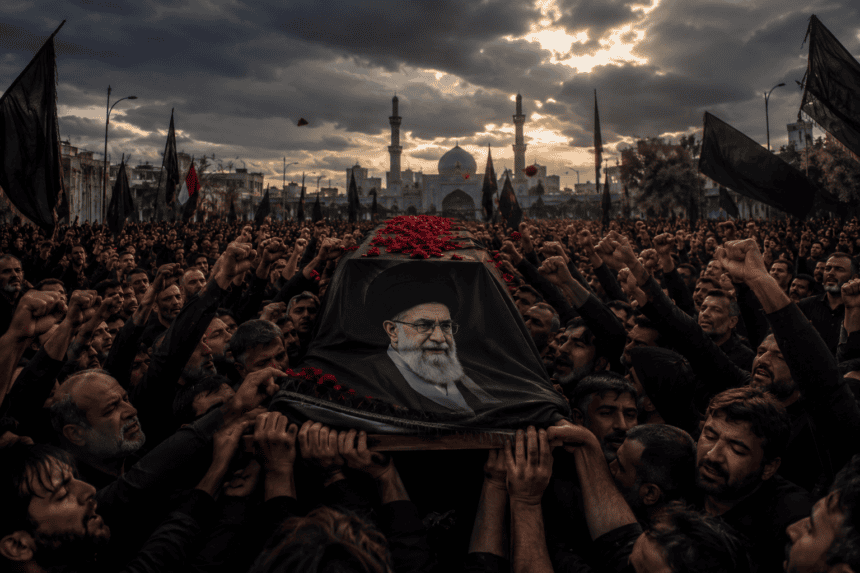
TEHRAN — Thousands packed the streets surrounding the Grand Mosalla of Tehran on Wednesday, their voices rising in a singular, rhythmic demand: “Revenge.”
The funeral prayers for the Supreme Leader, killed in a targeted strike earlier this week, transformed from a solemn religious rite into a volatile show of state-sanctioned defiance. Black banners draped the capital’s central squares, and the air hung heavy with the scent of incense and the raw tension of a nation on the brink of an unpredictable military response.
For the mourning crowd, the death isn’t just a leadership vacuum—it’s a provocation that demands a direct answer.
“We are not here to cry; we are here to ensure his blood isn’t wasted,” said Reza, 42, a shopkeeper who traveled from Qom for the procession. He stood near a barricade, clutching a portrait of the leader. “The enemy thinks they cut off our head. They’ve only made us more dangerous.”
State media broadcast the scene live, focusing on the sea of black-clad mourners and the fiery rhetoric from the podium. Military commanders stood stiffly near the casket, their faces obscured by caps and dark glasses. The message from the speakers was singular: the strike that took the leader’s life was an act of war, and the response will be calculated, severe, and inevitable.
Analysts warn that the pressure on Iran’s security council is immense. While the government maintains a public front of unity, the internal struggle now shifts to how—and when—to strike back without triggering a full-scale regional conflict. The clerical establishment relies heavily on the image of an invincible state; a failure to retaliate would be viewed by its hardline base as a sign of weakness.
Western intelligence agencies are watching the border movements closely. Satellite imagery indicates increased activity at missile launch sites, though Tehran has yet to signal its specific target. The ambiguity is deliberate. By keeping the world guessing, the Iranian leadership maintains a psychological edge while it recalibrates its military posture.
The procession wound slowly toward the city’s southern gate, where the casket will be interred. As the sun began to dip, the chanting grew louder, less a prayer and more a warning.
Tehran is currently in a state of high alert, with security forces stationed on every major intersection. The streets are quiet, but the silence is deceptive. Everyone here is waiting for the first move.